
Desert tobacco
Nicotiana obtusifolia
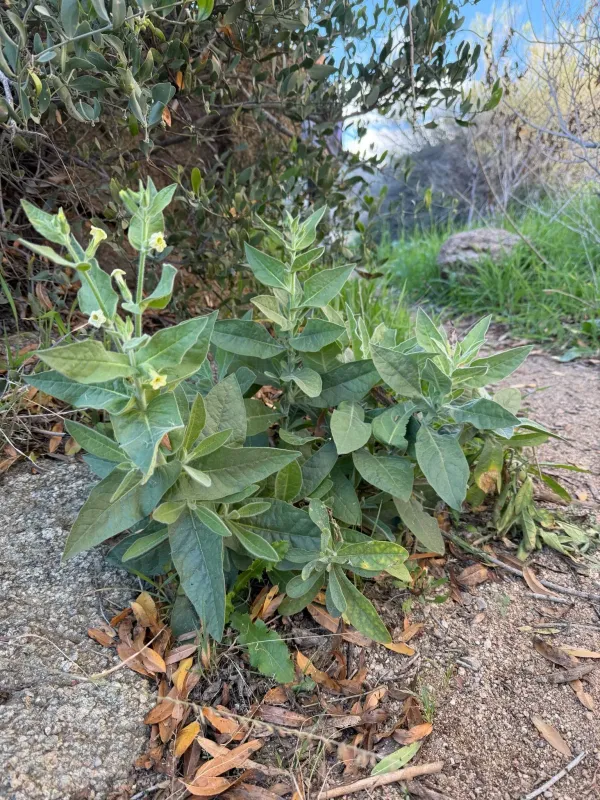
Description
Sowing dates
Nicotiana obtusifolia, commonly known as desert tobacco, is typically propagated via seeds that require light for germination. In professional cultivation, seeds are sown in fine, well-draining seed-starting mixes during late winter.
Temperature control during the germination phase is critical; maintaining a steady 20-25 degrees Celsius ensures uniform emergence. The seeds should be pressed firmly into the surface of the growing medium without covering them.
Transplanting into the field is carried out once the risk of frost has completely passed. The soil temperature should be sufficiently warmed, as the plant responds poorly to cold, waterlogged conditions during the establishment phase.
Spacing requirements vary depending on the intended use, but generally, 30-40 cm between plants allows for optimal air circulation. Proper spacing is essential to reduce the risk of localized humidity buildup.
The hardening-off process is mandatory for field-grown plants. Exposing seedlings to increasing amounts of sunlight and lower humidity over 7-10 days strengthens the stems and cuticle, ensuring better survival upon transplanting.
Growing requirements
As a member of the Solanaceae family, this species is naturally adapted to arid and semi-arid environments. It thrives in regions with intense solar radiation and high diurnal temperature fluctuations.
Soil requirements focus primarily on drainage. The crop requires sandy or gravelly soil types to thrive, as it is highly susceptible to root decay if water remains stagnant in the root zone for more than a few hours.
The plant demonstrates a remarkable tolerance for low nutrient availability, a common trait in its natural desert habitat. Excessive fertilization can lead to succulent growth that is more prone to insect infestation.
Optimal growth occurs in soils with a neutral pH level. While the plant can withstand some alkalinity, strong soil acidity will lead to nutrient deficiencies and reduced biomass production.
Management of water is the most important cultural practice. Once established, the plants require minimal supplemental irrigation, as they possess deep root systems capable of accessing deep soil moisture.
Main diseases and pests
Pest management for desert tobacco focuses on controlling aphids and whiteflies. These sucking insects are notorious for causing significant leaf damage and transmitting various plant viruses.
Cutworms present a major threat to newly transplanted seedlings. These larvae can sever the base of the plant at the soil line, leading to total loss of individual specimens within the plot.
Fungal issues such as Verticillium and Fusarium wilts are primarily associated with excessive soil moisture or poor drainage. Using high-quality, sterile soil for nursery stages is a standard preventive measure.
Tobacco mosaic virus remains a serious concern for any crop in the genus Nicotiana. Strict sanitation practices, including weed control and the removal of infected debris, are essential to mitigate the spread of this pathogen.
- Aphids
- Whiteflies
- Cutworms
- Tobacco mosaic virus
- Root rot