
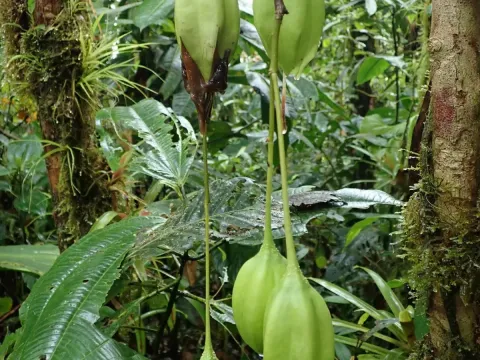
Trianaea
Trianaea
Trianaea is a genus of flowering plants belonging to the Solanaceae family, primarily native to the cloud forests of South America. These evergreen shrubs are known for their dense foliage and unique floral structures.
What the section contains


Trianaea
To cultivate Trianaea effectively, one must replicate its natural montane environment. The plant thrives in well-draining, nutrient-rich soil that mimics forest loam, maintaining a slightly acidic pH level for optimal nutrient uptake.
Temperature management is critical for the health of these shrubs. They prefer consistent temperatures between 18°C and 24°C. Exposure to frost or extreme heat can cause severe physiological stress and leaf drop.
Lighting requirements involve bright, filtered light. In a greenhouse setting, shading systems are often employed to prevent leaf scorching while ensuring sufficient light energy is available for photosynthesis.
Watering must be precise to avoid root suffocation. The soil should remain consistently moist, but not saturated. Drip irrigation systems are often preferred to ensure uniform moisture distribution across the root zone.
Pests such as aphids and spider mites are common threats to Trianaea. These insects thrive in enclosed environments and can quickly colonize the undersides of leaves, causing structural damage and stunted growth.
Fungal pathogens, particularly those causing root rot, are a major risk factor if irrigation is poorly managed. Prevention includes using sterile potting mixes and ensuring that drainage ports are never blocked.
Leaf spot diseases can occur if the foliage remains wet for extended periods. Improving airflow using oscillating fans is a recommended agronomic practice to reduce surface moisture on leaves.
Integrated Pest Management (IPM) strategies are highly effective for Trianaea. This involves monitoring insect populations and utilizing biological controls or targeted sprays before infestations become severe.
Maintaining plant vigor through balanced fertilization helps increase resistance to opportunistic diseases. Healthy, well-nourished plants are generally less susceptible to systemic infections and pest damage.