
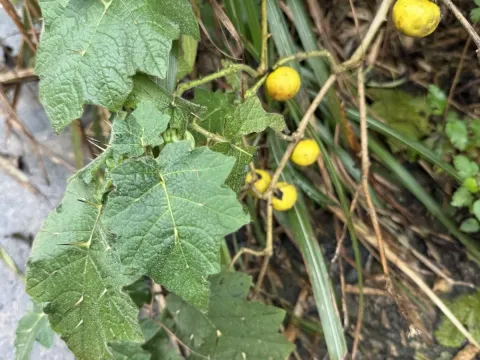
Tropical soda apple
Solanum viarum
Tropical soda apple (Solanum viarum) is a perennial shrub belonging to the Solanaceae family. Native to South America, including parts of Argentina and Brazil, this plant has gained attention as an agricultural crop due to its unique chemical profile.
What the section contains
Tropical soda apple
Botanically, the plant is characterized by its heavily armed stems and leaves covered in sharp spines. It features white flowers followed by spherical fruits that turn yellow when mature. The plant grows as a hardy bush, typically reaching a height of 1 to 2 meters under favorable conditions.
Regarding climate, the plant thrives in tropical and subtropical environments with frost-free winters. It requires abundant sunlight and performs best in well-drained sandy or loamy soils. Excessive moisture around the roots can lead to rot, so soil drainage is of paramount importance.
Cultivation practices involve proper spacing to allow for airflow and ease of harvest. Fertilization should focus on balanced NPK applications to support the rapid development of biomass and fruit production, which are essential for its pharmacological potential.
The industrial significance of Solanum viarum lies in the production of solasodine. This glycoalkaloid is extracted from the fruits and serves as a vital precursor in the synthesis of steroid-based pharmaceuticals, including various medicinal hormonal treatments.
Tropical soda apple is susceptible to several pathogens common in the Solanaceae family. Bacterial wilt and various fungal infections, such as those caused by Phytophthora species, are significant threats to plantation health and overall output.
Common pests affecting this crop include the Colorado potato beetle, tobacco hornworm, and aphids. These insects can cause extensive defoliation and may act as vectors for plant viruses, leading to systemic infection and reduced crop quality.
Pest management relies on a combination of chemical control, such as systemic insecticides, and preventive measures like removing alternative host weeds near the fields. Monitoring plant health during the flowering stage is critical for timely intervention.
Because the plant is considered an invasive species in many parts of the world, strict management is required to prevent it from escaping into natural ecosystems. Harvesting should be performed before fruits become overripe and susceptible to dispersal by local wildlife.
Integrated pest management (IPM) practices, such as crop rotation and the use of resistant genotypes, are recommended to maintain field health and reduce reliance on synthetic pesticides, thereby ensuring a safer and more sustainable production process.