
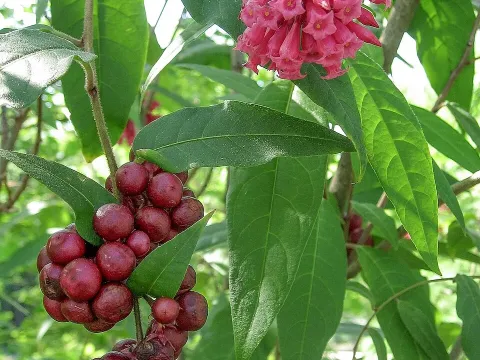
Cestrum endlicheri
Cestrum endlicheri
Cestrum endlicheri is a perennial evergreen shrub belonging to the Solanaceae family. Native to the mountainous regions of South America, this species has evolved to thrive in environments with consistent moisture levels and mild temperature conditions, reflecting its adaptation to subtropical forest margins.
What the section contains
Cestrum endlicheri
The plant exhibits distinct botanical features, including semi-woody stems and lanceolate foliage that produces aromatic oils. Its tubular flowers typically emerge in terminal clusters, serving as a significant source of nectar for local pollinators within its natural habitat range.
Agronomic success with this crop requires well-drained, nutrient-rich soil with a slightly acidic to neutral pH. Proper soil structure is essential, as the species is highly susceptible to root damage caused by waterlogging, which often leads to the proliferation of anaerobic bacteria and fungi.
Temperature requirements are stringent, with optimal growth occurring between 18 and 25 degrees Celsius. Cestrum endlicheri is not frost-tolerant, making it suitable for field cultivation only in tropical zones. In temperate regions, it must be grown in controlled greenhouse environments to protect it from thermal stress.
The primary utility of this plant lies in ornamental horticulture and botanical collection management. Its ability to produce high-density floral displays makes it a valuable asset for commercial greenhouse operations focusing on exotic flowering species intended for interior design and landscaping.
The primary pests affecting Cestrum endlicheri include aphid colonies, which tend to congregate on tender new growth. Infestations can lead to stunted plant development and the transmission of secondary viral infections if left untreated for extended periods.
Spider mites represent a frequent challenge in greenhouse environments where humidity is not strictly maintained. These pests thrive in dry conditions, causing widespread leaf chlorosis and eventual necrosis of the foliage if biological or chemical interventions are not promptly implemented.
Fungal diseases, specifically those causing powdery mildew and root rot, are the most common pathological threats. These are typically triggered by poor air circulation or over-saturation of the potting medium, requiring immediate pruning and soil moisture management.
Management of these threats involves routine sanitation of the cultivation area. Removing infected plant parts and ensuring adequate space between individual shrubs helps facilitate airflow, significantly reducing the probability of disease outbreak.
Integrated pest management protocols, including the introduction of natural predators or the application of selective acaricides, are recommended for large-scale operations to minimize chemical impact while ensuring the health and aesthetic quality of the crop.