
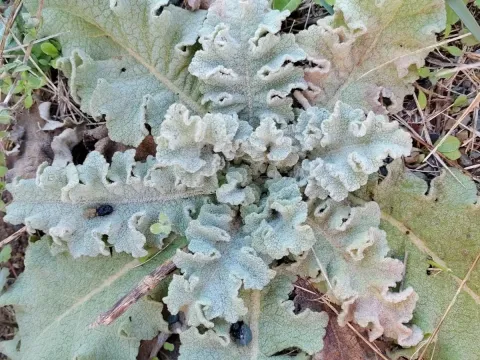
Wavy mullein
Verbascum sinuatum
Wavy mullein is a biennial herbaceous plant belonging to the Scrophulariaceae family. In its first year, it develops a robust basal rosette of leaves, and in its second year, it produces a tall, branched flower spike.
What the section contains
Wavy mullein
Seeding is typically performed in autumn or early spring. Due to the very small size of the seeds, they are sown at a shallow depth, no more than 1 cm, ensuring good contact with the moist soil surface.
Successful germination requires specific temperature ranges, usually between 15 and 20 degrees Celsius. Maintaining sparse planting density is essential to provide adequate air circulation and prevent overcrowding of the rosettes.
Native to the Mediterranean region, this species prefers open, sunny locations. It is commonly found in rocky terrains, dry grasslands, and alongside roadsides, showcasing its ability to thrive in challenging environments.
The plant exhibits high drought tolerance due to the dense, woolly hairs covering its leaves, which significantly reduce transpiration. This biological trait allows the plant to grow efficiently in nutrient-poor soils where other crops struggle.
The culture is highly light-demanding; even partial shade can inhibit the development of flower spikes and lead to a decrease in the concentration of beneficial medicinal compounds within the plant tissues.
Wavy mullein prefers light, well-drained sandy or loamy soils with a neutral or slightly alkaline pH. Waterlogging is detrimental to the root system and must be strictly avoided to prevent root diseases.
Moderate watering is beneficial during the early growth stages, but once established, the plant becomes highly xerophytic. Cultural practices focus on weed control and inter-row cultivation to ensure the soil remains aerated.
While the plant responds well to fertilization, excessive nitrogen can lead to exuberant leaf growth at the expense of flower production. A balanced fertilizer regimen rich in potassium and phosphorus is recommended for optimal yields.
The species has moderate winter hardiness. In regions with severe winters and no snow cover, the basal rosettes may require light mulching to protect the growing point from freezing temperatures.
Common pests include caterpillars of various moths and weevils that feed on the foliage. Under conditions of high humidity, the plant may be susceptible to powdery mildew and rust infections.
Pest attacks are most frequent during the first year of development. Monitoring the rosettes and employing biological pest control or timely intervention can significantly reduce crop damage and plant stress.
Fungal diseases are often linked to poor ventilation. Avoiding overly dense planting layouts is a primary defense strategy, as good airflow helps to prevent moisture accumulation near the foliage.
Preventative measures include crop rotation and the removal of plant debris to eliminate overwintering sites for pathogens. High-quality, disease-free seed selection is crucial for maintaining a healthy plantation.
Root rot is a major threat in poorly drained or waterlogged soils. Should signs of wilting appear, irrigation must be halted immediately, and the surrounding soil should be aerated to encourage root recovery.
The commercial harvest of wavy mullein focuses on the collection of flowers and leaves. Harvesting occurs during the peak flowering phase in the second year, ideally during the morning hours.
Flowers must be picked daily as they have a short lifespan and fall off quickly. Careful handling is required to prevent bruising the delicate petals, which could degrade the quality of the raw material.
Drying should take place in a shaded, well-ventilated area or in industrial driers at temperatures not exceeding 40 degrees Celsius. Excessive heat causes the loss of volatile oils and medicinal components.
Leaves can be collected throughout the growing season, selecting only the healthiest specimens free from pests. They are dried until brittle, ensuring long-term shelf life and high quality of the final product.
Stored in airtight containers in a cool, dark place, the dried raw material remains effective for up to two years. It is widely used in phytotherapy as an emollient and anti-inflammatory agent.