
Verbascum qulebicum
Verbascum qulebicum
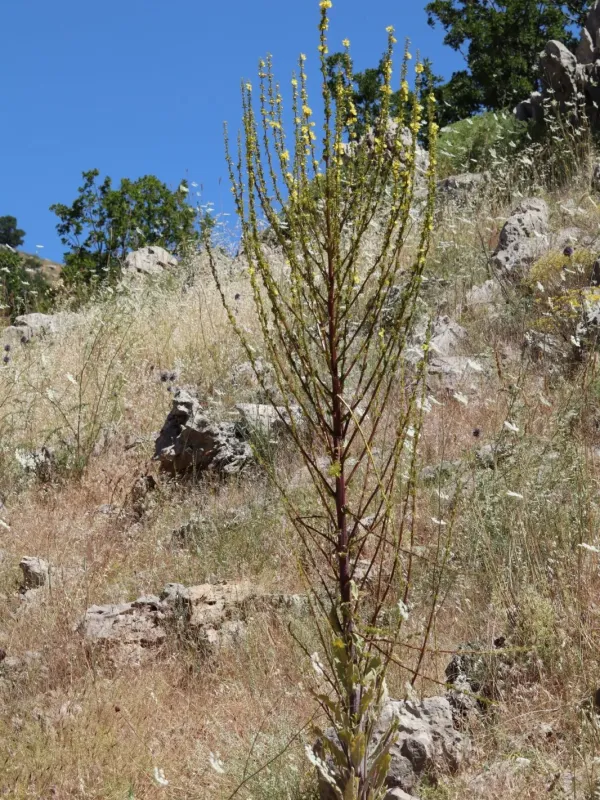
Description
Sowing dates
Sowing Verbascum qulebicum should take place in spring, ideally when the soil has warmed up to at least 10 degrees Celsius. Early spring planting is essential for the establishment of a strong rosette.
Due to the tiny size of the seeds, they should be sown on the surface of the soil with minimal coverage. Light rolling of the field after sowing can improve seed-to-soil contact.
Row spacing should be maintained at 50 centimeters to ensure adequate air circulation. This reduces the risk of fungal outbreaks as the plants mature into their second year.
Watering the seedbed lightly immediately after sowing ensures consistent moisture, which is critical for the germination of such small seeds.
After reaching the stage of true leaves, seedlings should be thinned to a distance of 30 centimeters between individual plants to prevent stunted growth.
Growing requirements
Verbascum qulebicum thrives in well-drained, sunny environments. Exposure to direct sunlight is mandatory for achieving optimal growth and secondary metabolite production.
The crop is highly adapted to sandy or gravelly soils where water does not linger. Poor drainage often causes root rot, which is fatal for this species.
It displays remarkable resilience to drought, utilizing its pubescent leaves to minimize transpiration. This makes it an efficient crop for regions with limited rainfall.
Neutral or slightly alkaline pH levels are ideal. In acidic conditions, the application of lime or wood ash can help balance the soil chemistry for better performance.
Minimal nitrogen fertilization is required, as excessive nutrition can cause weak, spindly growth, making the plants susceptible to lodging during windy weather.
Main diseases and pests
Fungal leaf spot pathogens are common when plants are overcrowded. Proper ventilation and spacing are the primary methods of avoiding these issues in the field.
Insect larvae that feed on foliage can impact the overall health of the plant. Monitoring during the early summer months is recommended for effective control.
Root rot is the most serious threat caused by poor soil drainage. Ensuring that the site is elevated or sloped is the best preventive measure against this problem.
Aphid infestations can occur during long, dry spells. If detected, organic insecticidal soaps can be used to mitigate the damage without harming beneficial insects.
Field hygiene, including the removal of dead plant parts at the end of the season, helps reduce the carryover of spores and eggs for the next growing cycle.