
Verbascum schimperianum
Verbascum schimperianum
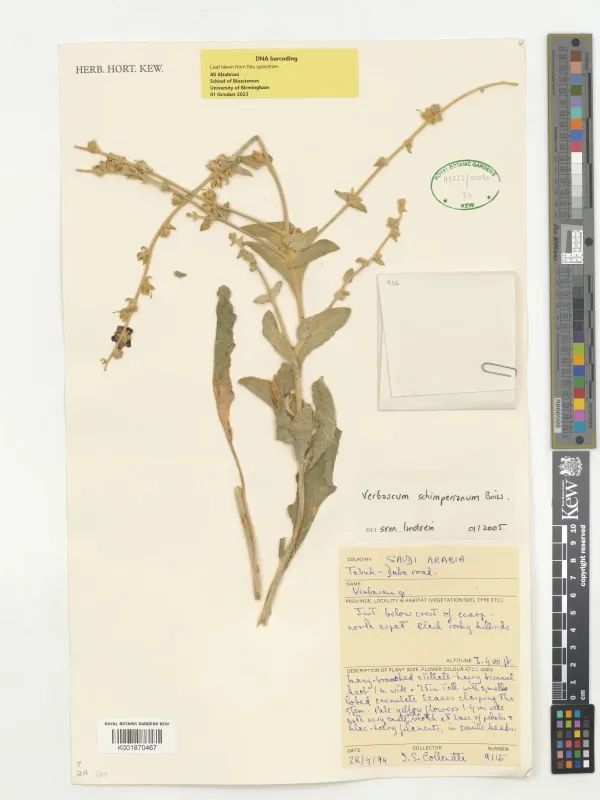
Description
Growing requirements
Verbascum schimperianum is a perennial herbaceous plant belonging to the Scrophulariaceae family. Known for its resilience, it is typically native to rocky, arid mountain regions, which defines its specific growth requirements.
This crop thrives in well-drained, sandy, or rocky soils. It is highly sensitive to waterlogging, so site selection must prioritize areas with excellent soil permeability to prevent root rot and ensure healthy development.
The plant requires full sun exposure to achieve its maximum potential. Intense solar radiation promotes the development of secondary metabolites, which are essential for the plant's medicinal value and overall vigor.
Climatically, Verbascum schimperianum is adapted to extreme temperature fluctuations. It is a drought-tolerant species, meaning that supplemental irrigation should be kept to a minimum once the plants are established.
In terms of agronomic practice, the maintenance of soil aeration is critical. Regular weeding is recommended during the seedling phase to prevent competition, as young plants may grow slowly until their taproot system is fully developed.
Yield
The yield of Verbascum schimperianum is measured primarily by the weight of the dried flowers collected throughout the flowering season. Industrial production relies on systematic planting patterns to maximize the yield per hectare.
Under optimal conditions, the plant begins to produce significant flowering stems by its second growing season. High-quality yield is determined by the concentration of mucilaginous compounds, which are at their peak during the full bloom phase.
Crop management focuses on thinning the plants to ensure enough space for flower development. Crowded plants often exhibit stunted growth and reduced flower production, impacting the final quality of the harvest.
Successful cultivation requires consistent soil monitoring to ensure the plant has enough micronutrients to support its extensive blooming period without the need for heavy chemical fertilization.
Data suggests that long-term plantation health depends on the manual removal of spent stems to prevent disease spread and encourage the plant to allocate energy to future vegetative cycles.
Harvesting
Harvesting Verbascum schimperianum is a labor-intensive process that must be performed daily during the peak flowering period. Flowers are typically gathered as they open, as they have a short lifespan.
Quality control during harvest involves collecting only the intact corollas. Collectors are advised to work during the dry hours of the day to ensure that moisture content is minimized before the drying process begins.
Immediately following the collection, the raw material must be transported to a drying facility. Proper airflow is essential to prevent the flowers from fermenting or turning brown, which would decrease their market value.
The drying phase requires low-temperature control to preserve the delicate compounds found in the flower petals. Exceeding 40 degrees Celsius can cause a degradation of the chemical profile of the herb.
Final processing includes grading the dried flowers to remove debris and ensuring that only the highest quality botanical material is stored for pharmaceutical or cosmetic use.