
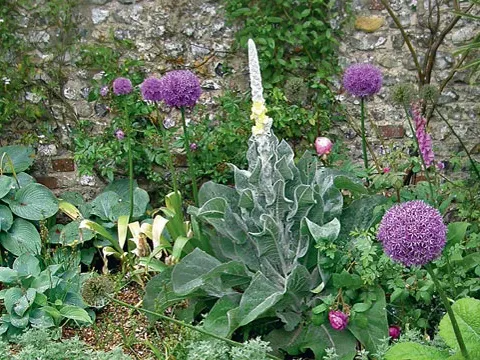
Woolly mullein
Verbascum lanatum
Woolly mullein is a perennial or biennial herb belonging to the Scrophulariaceae family, valued for its medicinal properties and unique appearance. Seeds are typically sown in well-prepared soil during either late autumn or early spring once temperatures stabilize.
What the section contains
Woolly mullein
Due to the small size of the seeds, they should be sown at a shallow depth of approximately 0.5 to 1 cm. A standard row spacing of 45–60 cm provides ample room for the plant to develop its basal rosette, which is vital for the growth of the foliage.
Seedlings usually emerge within 14 to 20 days, requiring consistent soil moisture during the germination stage. It is important to thin out the seedlings early to prevent overcrowding, which can inhibit the development of individual plants.
Optimal growth occurs at temperatures between 18 and 24 degrees Celsius. Early spring planting is often preferred to allow the root system to establish itself thoroughly before the potential heat stress of mid-summer.
In large-scale farming, precision seed drills are utilized to ensure uniform spacing and depth. Proper soil contact is essential for successful germination, so light rolling after sowing is a recommended agronomic practice.
Woolly mullein thrives in light, well-draining soils, preferring sandy loam or loamy textures. It is highly adaptable but performs best in neutral to slightly alkaline soil environments, avoiding heavy, waterlogged clay.
This plant is remarkably drought-tolerant, thanks to the thick felt-like hairs covering its leaves, which minimize transpiration. However, irrigation is beneficial during the vegetative growth phase to maximize biomass production.
Full sun is a prerequisite for healthy growth and high chemical quality of the leaves. Shaded environments tend to produce weak, elongated plants with a lower concentration of secondary metabolites, which are essential for medicinal applications.
Regular cultivation between rows is necessary to manage weeds and maintain soil aeration. Healthy soil structure promotes efficient nutrient uptake, particularly for phosphorus and potassium, which are critical for robust foliage development.
Fertilization regimes should prioritize balanced nutrient inputs, avoiding excessive nitrogen that can promote succulent growth susceptible to pathogens. Slow-release fertilizers are ideal for maintaining steady growth over the season.
The yield of woolly mullein is primarily measured in dry leaf weight per hectare. Under optimal management, farmers can expect a significant harvest of high-quality medicinal foliage per season depending on climate and regional soil conditions.
Harvesting is typically timed to coincide with the onset of the flowering stage, as this is when the bioactive compounds are at their peak concentration. Correct timing ensures the highest potency of the harvested raw material.
Efficient post-harvest handling is critical to maintaining quality. The foliage should be processed immediately after cutting to prevent chemical degradation and spoilage caused by fermentation within the plant tissue.
Productivity remains stable over several years with appropriate maintenance and crop rotation practices. Once a plant finishes its reproductive cycle, it can be harvested for foliage, and the field should be prepared for future cycles.
Market demand often dictates the standards for harvesting, with clean, undamaged leaves fetching higher prices. Implementing mechanical harvesting methods helps maintain high output volumes while reducing labor costs.
Common issues include fungal pathogens like powdery mildew, which can thrive in humid conditions. Preventive fungicide applications and ensuring adequate air circulation are standard methods to mitigate these risks.
Pests such as leaf-eating caterpillars and aphids can cause localized damage. Integrated pest management (IPM) strategies, including biological control agents, are effective in protecting the crop without leaving harmful chemical residues.
Root rot is a major threat in fields with poor drainage. Proper land leveling and the installation of drainage tiles where necessary are essential to prevent the accumulation of excess water around the crown of the plant.
Crop rotation is crucial to prevent the build-up of soil-borne diseases that are specific to the Scrophulariaceae family. Rotating with non-related crops every few years helps maintain soil health and plant vigor.
Regular scouting of the field is necessary to identify potential problems early. Quick detection allows for spot treatments, which are much more efficient and environmentally friendly than wide-scale chemical applications.
Harvesting should only occur on clear, dry days to ensure no moisture is trapped in the leaves. Morning harvests, after the dew has evaporated, provide the best conditions for maintaining high leaf quality.
Using sharp tools for harvesting is essential to ensure clean cuts, which minimizes tissue damage and reduces the entry points for disease. The leaves should be harvested in batches to ensure freshness until they reach the drying facility.
Drying is performed in controlled-environment drying chambers to preserve the silver color and bioactive content of the foliage. Temperatures must be strictly regulated to avoid heat damage to delicate plant structures.
Once dried, the leaves are sorted to remove any discolored or damaged material, ensuring only high-quality product is packaged. This final sorting is vital for meeting pharmaceutical quality requirements.
Storage facilities must be kept cool, dry, and well-ventilated to prevent moisture absorption and mold growth. Proper packaging in breathable containers helps maintain the shelf life of the medicinal raw material.