
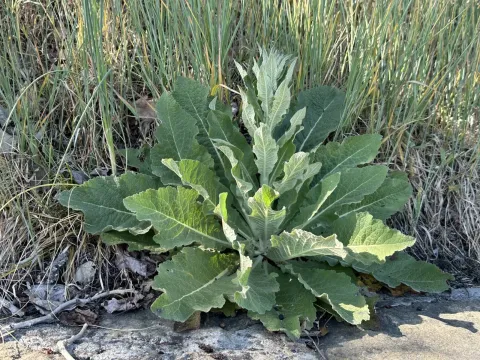
White mullein
Verbascum lychnitis
White mullein (Verbascum lychnitis) is a biennial herbaceous plant belonging to the Scrophulariaceae family. During the first year, it develops a rosette of basal leaves, while in the second year, it produces a tall, sturdy flowering stem.
What the section contains
White mullein
Propagation is primarily achieved through seeds. Sowing in open ground can be done in late autumn or early spring, as the seeds benefit from cold stratification to ensure uniform germination.
The seeds are extremely small, so they should be sown shallowly, ideally not deeper than 0.5–1 cm. Maintaining proper spacing, typically 50–60 cm between rows, is essential for healthy plant development.
Seedlings usually emerge within two to three weeks under favorable moisture conditions. It is crucial to prevent the soil from drying out completely during the germination stage to ensure a good stand.
Once established, the plant shows vigorous growth in its second year, creating a distinctive inflorescence that reaches heights of up to 120 cm.
White mullein thrives in full sun and requires open, well-lit locations. Shade can lead to leggy stems and a decrease in the quality of the phytochemicals within the plant tissues.
The plant is not demanding regarding soil quality. It prefers light, sandy, or well-drained loamy soils. Good drainage is vital, as the plant is sensitive to waterlogged conditions, which can cause root decay.
It exhibits high drought tolerance, making it suitable for growing on poor or rocky soils. This hardiness allows it to establish itself in various wild habitats, such as woodland edges and road verges.
A neutral to slightly alkaline soil pH is preferred for optimal growth. On highly acidic soils, liming the ground before sowing can significantly improve plant vigor and yield.
Agricultural management should include regular inter-row cultivation to control weeds, especially during the first year when the plant is establishing its root system.
The economic value of white mullein lies in its flowers, which are harvested for herbal and pharmaceutical purposes. Yield depends on plant density and the quality of the cultivation site.
Flowering occurs from June through August. Since individual flowers are short-lived, harvesting requires daily collection in dry, sunny weather to ensure the best possible quality.
The plant also serves as an important honey source, attracting various pollinators, which can be a secondary benefit for farmers practicing integrated pest management or honey production.
Since the plant is biennial, plantation rotation is necessary. The crop reaches its peak productivity in the second year, after which the plants set seed and naturally expire.
Proper harvesting practices and favorable weather during the flowering season are critical for maximizing the yield of dried floral material per hectare.
White mullein is generally resistant to most common agricultural pests due to the high content of bitter compounds and saponins in its leaves and flowers.
However, in humid or rainy seasons, powdery mildew can occur, manifesting as a white fungal layer on the leaves and potentially reducing the plant's overall health.
Root rot remains a concern only in poorly drained soils or areas where water accumulates after heavy rainfall. Selecting a site with proper slope or soil texture is the best prevention.
Insect damage, such as leaf chewing by caterpillars, is usually sporadic and rarely reaches levels that require chemical intervention in small or medium-scale plantations.
Good agricultural practices, such as maintaining proper plant spacing to allow for airflow, are the most effective way to prevent the development of diseases.
Harvesting is performed during the peak flowering period. Only the corollas should be collected; care must be taken to remove any parts of the calyx to maintain high product purity.
Drying should begin immediately after harvest. Using controlled conditions with temperatures not exceeding 40–45 degrees Celsius ensures that the vibrant color and active compounds are retained.
Properly dried material should be stored in airtight, moisture-proof containers. Light and humidity are the primary enemies of high-quality medicinal mullein flower products.
Seeds are harvested in late autumn when the capsules turn brown and begin to dehisce. They are then threshed and cleaned for the next planting season.
Stored seeds retain viability for several years if kept in a cool, dry, and dark environment, allowing for reliable future propagation of the species.