
Woolly mullein
Verbascum mallophorum
Description
Sowing dates
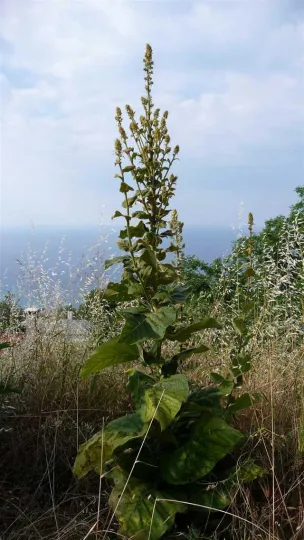
Woolly mullein (Verbascum mallophorum) belongs to the Scrophulariaceae family. It is a biennial herbaceous plant that develops a vegetative basal rosette during the first year and a tall flowering stem in the second year of growth.
The ideal time for sowing is early spring when the soil temperature reaches at least 8-10 degrees Celsius. Alternatively, late autumn sowing can be performed to allow for natural stratification, leading to earlier and more uniform germination.
Seeds are extremely small and should be sown at a depth of no more than 0.5 cm. Light is a crucial factor for germination; therefore, the seeds should not be buried deeply in the soil, and the surface should be kept lightly pressed.
After germination, thinning the rows to maintain a spacing of 30-40 cm is essential. Proper spacing allows each plant to develop its rosette fully and prevents excessive humidity, which is vital for preventing rot diseases.
The plant is resilient and adapts well to various field conditions, making it an excellent candidate for cultivation on lands that may not be suitable for more demanding agricultural row crops.
Growing requirements
This species is highly heliophilous, meaning it requires full sun exposure to thrive. Planting in shaded areas leads to etiolated stems and a significant decrease in the accumulation of the desired secondary metabolites in the plant tissues.
It is not demanding regarding soil quality, performing well in sandy or loamy soils. The most critical requirement is excellent drainage, as the species is highly susceptible to root damage caused by prolonged waterlogging or high moisture content.
Due to the dense, felt-like hairs covering the leaves and stems, Verbascum mallophorum exhibits excellent drought tolerance. It manages to maintain turgidity and continues its growth cycle even during periods of low precipitation.
The plant is highly frost-hardy and survives winter temperatures in temperate zones without special protection. The basal rosette remains green throughout mild winters, ready to resume growth as soon as spring temperatures arrive.
Agronomic management should prioritize early weed control. Since the plant grows slowly during its first year, it can be easily outcompeted by aggressive weeds if the field is not kept clean during the initial months of development.
Main diseases and pests
Common threats to woolly mullein include fungal pathogens, particularly when the plants are grown in poorly ventilated or excessively humid conditions. Leaf spot diseases caused by Phyllosticta or Septoria species are frequent under these circumstances.
Insect pests, such as various species of caterpillars or weevils that feed on leaves and flower buds, can significantly reduce the marketable yield if not managed through integrated pest control strategies.
Root rot, primarily caused by Pythium or Rhizoctonia, poses a significant risk if the soil structure is compact or lacks adequate drainage, often leading to rapid wilting and plant death.
To prevent disease outbreaks, crop rotation should be practiced. Planting mullein in the same field for consecutive years increases the risk of soil-borne pathogens and nutrient depletion, negatively affecting vigor.
Effective management includes regular monitoring for early signs of infection, removal of severely affected plants, and applying recommended organic fungicides if the infestation threshold is reached during the growing season.
Harvesting
The primary part used for production is the corolla of the flower. Harvesting is performed manually throughout the flowering season, ideally in the early morning after the dew has evaporated but before the flowers begin to wilt.
Quality control during harvest is paramount; pickers must ensure that only the vibrant yellow petals are collected, excluding the calyx and pedicels, which add weight but lack the required medicinal properties.
Immediate processing is necessary, as harvested flowers are delicate and susceptible to rapid browning or rotting if stored in piles. Drying should be initiated within a few hours of harvesting to lock in the bioactive compounds.
Drying is conducted at controlled temperatures (40-50°C) in ventilated dryers. If done correctly, the final product retains a golden-yellow color and a subtle honey-like fragrance, indicating premium quality for commercial distribution.
Storage must be in airtight, light-resistant containers. Because the dried corollas are hygroscopic, keeping them in a humidity-controlled environment is essential to prevent degradation and loss of quality over time.