
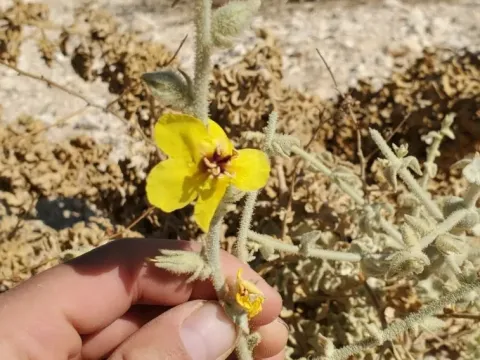
Desert mullein
Verbascum eremobium
Desert mullein (Verbascum eremobium), belonging to the Scrophulariaceae family, is a highly resilient species perfectly adapted to extreme arid and semi-arid environments. It serves as a classic example of a xerophytic plant capable of thriving in harsh desert conditions.
What the section contains
Desert mullein
Botanically, the plant is characterized by its dense tomentose (hairy) coverage on leaves and stems, which acts as a thermal shield and reduces water loss through transpiration. Its root system is deep and efficient, allowing the plant to tap into deep soil moisture reserves.
The cultivation of desert mullein requires well-drained soils, ideally sandy or rocky substrates with low organic matter. Unlike conventional crops, it does not require high levels of nitrogen fertilization and can thrive in saline environments, making it suitable for marginal lands.
Climate requirements include high intensity of solar radiation and low relative humidity. Excessive rainfall or high soil moisture levels are detrimental, often leading to physiological disorders or stunted development of the root system.
Agronomic practices for this species focus on site selection and ensuring sufficient space between plants to allow for airflow. As an unconventional crop, its management is largely extensive, prioritizing water management over soil amendment.
The primary threats to desert mullein are soil-borne pathogens, particularly fungi that cause root rot during periods of uncharacteristic moisture or poor field drainage. These pathogens can cause rapid collapse of the plant vascular system.
Insect pests include various species of weevils and aphids that target the succulent floral spikes and tender leaves. Managing these pests usually involves monitoring and, if necessary, targeted applications of insecticides during the early stages of infestation.
Competition from weeds is a significant concern during the establishment phase. Once the plant has developed its primary rosette, it generally suppresses neighboring weeds through shading and resource depletion.
Integrated pest management (IPM) is recommended to maintain the ecological balance of the field. This includes crop rotation and the removal of infected plant debris to prevent the buildup of inoculum in the soil.
Maintaining a balanced irrigation strategy is the single most important factor in preventing disease outbreaks. Providing only the necessary amount of water during dry periods is more effective than any chemical treatment in keeping the crop healthy.