
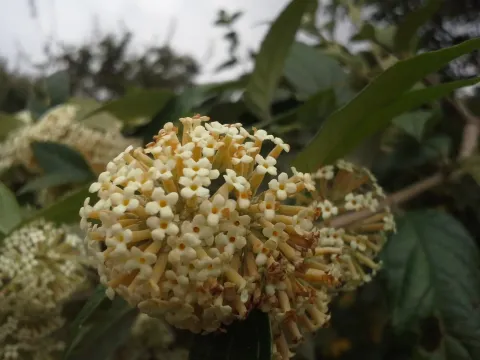
Eared butterfly-bush
Buddleja auriculata
Buddleja auriculata, known as the eared butterfly-bush, is a semi-evergreen shrub belonging to the Scrophulariaceae family. It is native to the forests and mountain slopes of Southern Africa, where it thrives in mild, frost-free climates.
What the section contains
Eared butterfly-bush
The plant is distinguished by its leathery, dark green leaves which feature small, ear-like appendages at the base of the petioles. These botanical characteristics give the species its scientific and common name, making it an interesting specimen for botanical collections.
The shrub requires full sun to partial shade and prefers fertile, well-draining soil. It is vital to ensure that the site provides shelter from strong winds, which can damage the long, arching stems of the plant.
In terms of climate, it is a tender shrub. While it can withstand light frosts, it generally requires winter protection or to be grown in containers in colder climates to prevent damage to the root system and foliage.
Its primary use is in ornamental gardening and landscape design. The flowers are highly fragrant, producing a sweet honey-like scent that makes the shrub an excellent choice for butterfly gardens and pollinator-friendly landscapes.
Spider mites are common pests that affect the foliage, especially during hot and dry summer months, leading to leaf yellowing and premature shedding.
Whiteflies can infest the undersides of leaves, requiring immediate attention to prevent the formation of sooty mold that often follows their secretions.
Root rot is a major threat caused by waterlogged soil. Ensuring a proper drainage system and avoiding overwatering are the most effective ways to prevent this issue.
Powdery mildew may occur if the air circulation around the shrub is insufficient. Pruning the plant annually helps maintain an open habit and improves airflow.
Regular inspection and sanitation are critical. Keeping the planting area free of debris and maintaining strong, healthy plants will help the shrub resist common pests and diseases more effectively.