
Desert figwort
Scrophularia deserti
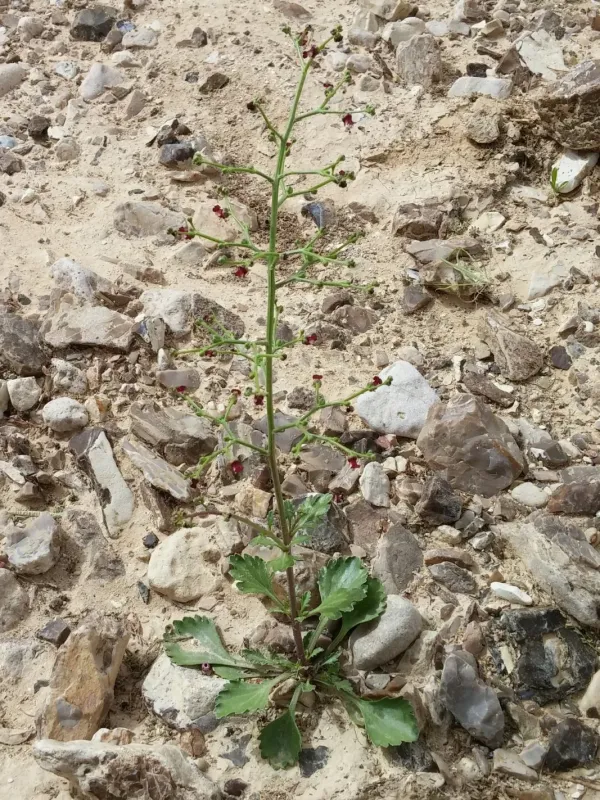
Description
Sowing dates
Sowing of Scrophularia deserti is best performed in late autumn or early spring, as soon as the soil can be worked. The seeds require consistent moisture to germinate, with an optimal temperature range of 12–15 degrees Celsius.
The seeds are known for their dormancy; therefore, cold stratification for 30 to 45 days is highly recommended to improve germination rates significantly. This process mimics the natural environmental cues the seeds need to break dormancy.
The planting depth should be shallow, typically around 0.5 to 1 cm. Since the seeds are small, they rely on light availability and shallow placement to emerge successfully without exhausting their energy reserves.
For field cultivation, a row spacing of 45–60 cm is standard. This spacing provides enough room for individual plants to develop their root systems while allowing for mechanical cultivation between rows to manage weeds effectively.
The seeding rate should be calibrated based on the germination potential of the seed batch, usually averaging 1–1.5 kg per hectare. Proper soil compaction after sowing ensures good seed-to-soil contact, which is vital for establishment.
Growing requirements
Desert figwort is a xerophytic plant, well-adapted to arid environments. It thrives in full sun exposure and requires sites with high solar radiation to achieve its full physiological potential during the growing season.
The soil must be light, sandy, or loamy with excellent drainage. This plant is highly sensitive to waterlogging; heavy clay soils or sites with poor drainage will lead to root rot and complete failure of the crop.
Soil reaction should be neutral or slightly alkaline. Periodic cultivation of the inter-row spaces is essential to improve soil aeration, which supports root development and helps maintain the soil structure.
While the species is drought-tolerant, moderate supplemental irrigation during critical growth stages, especially during flowering, can significantly boost the biomass yield without compromising the quality of secondary metabolites.
Fertilization should be handled with caution. Excess nitrogen promotes rapid vegetative growth that can dilute the concentration of active medicinal compounds. Therefore, phosphorus and potassium-based fertilizers are preferred to promote root health and overall plant resilience.
Yield
The yield of Scrophularia deserti is heavily influenced by the management of soil moisture and competition with weeds. Under intensive farming conditions, a harvest of 1.5 to 2.5 tonnes of air-dried raw material per hectare is achievable.
Yield tends to peak in the second and third year of the crop's lifecycle. During this time, the root systems are fully established, and the plants produce maximum vegetative biomass, which is the primary source of the pharmacological harvest.
Effective weed management is the single most important factor in maximizing yield. The plant grows slowly in its early stages and is easily outcompeted by aggressive weeds, making timely mechanical weeding mandatory.
The timing of the harvest is crucial, as the concentration of active compounds, such as saponins and glycosides, is highest during the mass flowering stage. Harvesting at this specific time ensures that the product meets high-quality industrial standards.
Post-harvest processing involves drying the plant material in ventilated areas or specialized dryers at temperatures not exceeding 40–45 degrees Celsius to prevent the thermal breakdown of heat-sensitive chemical constituents.
Main diseases and pests
Root rot is the most common threat to Scrophularia deserti, usually caused by poor soil drainage or excessive irrigation. This fungal disease is often lethal and can quickly spread throughout a field if not controlled.
Powdery mildew can occur during periods of prolonged high humidity. It manifests as a white, powdery fungal growth on the leaves, which inhibits photosynthesis and weakens the plant, ultimately reducing biomass and secondary compound production.
Various insect pests, including certain species of beetles and caterpillars, can damage the leaves and reproductive structures. Monitoring is necessary, especially during the early growth phases to prevent extensive herbivory damage.
Integrated Pest Management (IPM) strategies are recommended. This includes crop rotation to break the lifecycle of soil-borne pathogens and regular field inspections to detect early outbreaks of pests before they require chemical intervention.
Chemical control measures should be used as a last resort, as residue levels are strictly monitored for medicinal crops. Maintaining a healthy balance of soil microorganisms and avoiding excessive chemical input is essential for long-term production success.
Harvesting
Harvesting is typically performed using mechanical mowers. The cutting height must be carefully adjusted to ensure that only the desired aerial parts are gathered, avoiding excessive soil contamination or harvesting the woody base of the plant.
Timing the harvest according to the phenological stage of the plant is vital. Once the mass flowering begins to wane, the nutritional and medicinal quality of the raw material starts to decline, making timely scheduling essential for profit optimization.
After cutting, the biomass should be transported to the drying facility immediately. Allowing the plant material to pile up can lead to fermentation and overheating, which rapidly degrades the product's quality and shelf life.
Post-harvest cleaning is necessary to remove debris, soil, and non-target plant material. High-purity raw material fetches higher market prices and is easier to process during the extraction phase of medicinal compound production.
Stored raw material should be kept in a cool, dry, and well-ventilated environment. Exposure to direct sunlight or moisture during storage can lead to the oxidation of active components, significantly reducing the efficacy of the dried product over time.