
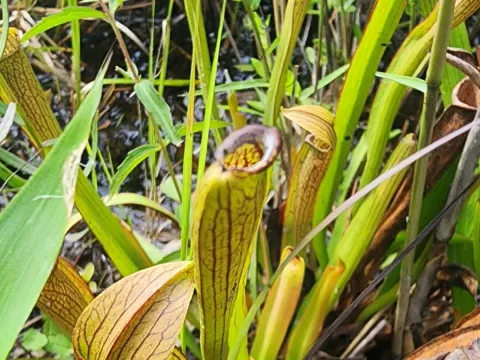
Sweet pitcher plant
Sarracenia rubra
Propagating Sarracenia rubra can be successfully achieved through seeds, although this process requires patience. Seeds must undergo a period of cold stratification for about 6 to 8 weeks in a moist medium to simulate winter conditions and break dormancy.
What the section contains
Sweet pitcher plant
Sowing is best performed in late winter or early spring using a mix of peat moss and perlite. The seeds should be scattered on the surface of the damp substrate and kept in a brightly lit, humid environment, ensuring they are not buried deep in the soil.
Vegetative propagation is an alternative method involving the division of the rhizome during the plant's dormant season. Carefully separating the rhizome allows for the creation of new, mature plants that will retain the parent plant's specific growth characteristics.
Seedlings develop quite slowly during their first year. It is crucial to maintain high humidity and provide consistent, gentle light without exposing them to intense, direct summer sun until they have developed a robust root system and multiple mature pitchers.
Using a sterile substrate is vital to prevent fungal issues during the early stages of development. Always ensure the peat moss is free from fertilizers or added minerals, as the plant's roots are highly sensitive to soil nutrient levels.
Sarracenia rubra, commonly known as the sweet pitcher plant, is a carnivorous species belonging to the Sarraceniaceae family. It is native to the southeastern United States, thriving in nutrient-poor, boggy environments where it traps insects for sustenance.
The primary requirement for this species is pure water. Use only distilled water, rainwater, or reverse osmosis water, as tap water typically contains dissolved minerals that will cause chemical burn to the root system and eventual plant mortality.
Full sun is essential for the healthy growth of this plant. It requires at least 6 to 8 hours of direct sunlight daily to maintain its structural integrity and develop the vibrant red coloration that gives the species its name and aesthetic appeal.
The plant requires a distinct winter dormancy period. During this time, which typically lasts from November through February, growth slows significantly, and the plant should be kept in a cooler environment at temperatures around 5 to 10 degrees Celsius.
Soil moisture must be maintained at all times. In cultivation, the most efficient approach is the tray method, where the pot sits in a shallow layer of water, mimicking the natural water levels found in its native wetland habitats.
The sweet pitcher plant is susceptible to common greenhouse pests, including aphids and spider mites. These insects tend to feed on the developing pitchers, which can deform the leaves and inhibit the plant's ability to catch prey effectively.
Fungal pathogens such as gray mold often develop in stagnant air conditions or when the plant is kept in an environment with poor ventilation. Regular air movement is necessary to prevent these infections from spreading throughout the collection.
Over-fertilization or the use of contaminated water sources remains the biggest threat to this species. Because the plant has evolved to survive in nutrient-poor conditions, any excess of minerals acts as a toxic agent to the delicate roots.
During winter dormancy, if temperatures are too high and humidity is excessive, the rhizome is at risk of rotting. Monitoring the soil moisture is critical during the winter months to ensure the substrate is damp but never waterlogged.
Integrated pest management should be practiced, prioritizing mechanical removal of pests over chemical intervention. If chemical treatment is unavoidable, ensure the product is labeled safe for carnivorous plants, as many standard pesticides are fatal to them.