
Darlingtonia
Darlingtonia
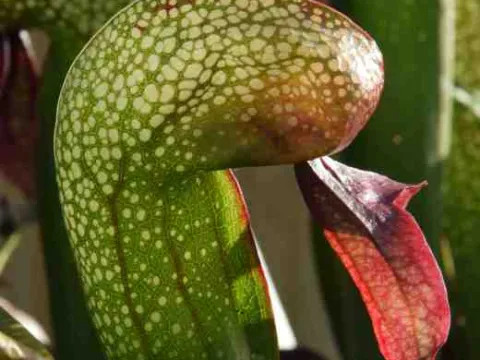
Darlingtonia californica, commonly known as the cobra lily, belongs to the Sarraceniaceae family. It is a rare carnivorous perennial native to the boggy areas of Northern California and Southern Oregon.
What the section contains

Darlingtonia
To successfully cultivate this species, growers must mimic its natural cool-water bog environment. The roots require constant cooling, which is a major challenge in artificial home or greenhouse conditions.
The potting medium must be extremely nutrient-poor and airy. A mix of long-fiber sphagnum moss, perlite, and small chunks of orchid bark is standard to ensure excellent drainage and root oxygenation.
Irrigation is one of the most critical aspects of Darlingtonia husbandry. Only pure distilled water, reverse osmosis water, or rainwater should be used, as tap water minerals are toxic to these sensitive roots.
The plant thrives in bright, filtered sunlight. While it needs significant light to develop its signature cobra-like hoods, it must be protected from extreme mid-day heat that can scorch the foliage.
Root rot is the primary cause of plant death, triggered by stagnant, warm, and poorly aerated waterlogged soil. Proper drainage is essential to maintain the health of the rhizome.
Aphids and spider mites are the most common pests for Darlingtonia kept in indoor settings. They congregate on the developing leaves, causing significant structural damage to the traps.
Botrytis, or grey mold, can affect the plant if humidity levels remain too high without adequate airflow. Good ventilation is vital to prevent fungal spores from settling on the hoods.
Mineral accumulation due to improper water quality will eventually lead to salt burns on the tips of the leaves. This results in progressive browning and weakening of the entire plant structure.
Fungus gnats can pose a risk to younger specimens, as their larvae may feed on the delicate root system. Maintaining a slight surface dryness or using biological controls is recommended for infestation management.