
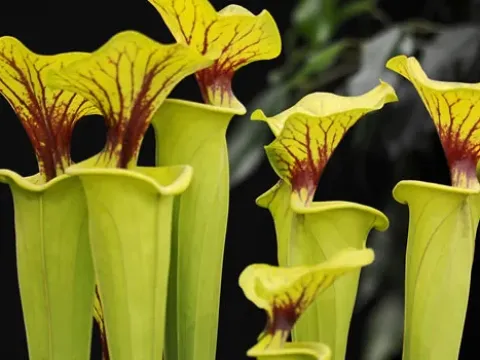
Yellow pitcher plant
Sarracenia flava
The Yellow Pitcher Plant (Sarracenia flava) is a perennial carnivorous plant native to the southeastern United States, belonging to the Sarraceniaceae family. It is specialized for growth in nutrient-poor, acidic, and waterlogged peat bogs.
What the section contains
Yellow pitcher plant
The plant features iconic tall, trumpet-shaped leaves (pitchers) that serve as specialized traps for insects, allowing the plant to thrive in nitrogen-deficient environments where other vegetation struggles.
Cultivation requires a specific medium consisting primarily of high-quality sphagnum peat moss and perlite. It is essential that the potting mix remains free of any added fertilizers, as they can cause rapid root burn.
Abundant light is a primary requirement for this species. To maintain the vibrant yellow coloration of the pitchers and overall plant health, it should receive several hours of direct, intense sunlight each day.
Water quality is critical; the plants must be kept consistently moist using only distilled water, rainwater, or deionized water to prevent the accumulation of minerals that are toxic to Sarracenia roots.
Grey mold (Botrytis) is a significant threat, especially when high humidity levels coincide with poor ventilation and cooler temperatures in a greenhouse or indoor setting.
Root rot is the most common cause of failure in Sarracenia cultivation, typically triggered by improper drainage or the use of non-sterile, organic-heavy soil substrates.
Aphids frequently target the nectar glands and developing flower buds, which can lead to stunted growth and the spread of viral infections between neighboring plants.
Spider mites are common pests in low-humidity environments, appearing as fine webbing on the interior or exterior of the pitchers and causing the tissue to lose its structural integrity.
Regular monitoring of the pitcher fluid and leaf surfaces is necessary to catch infestations early, while maintaining proper airflow is the best defense against fungal outbreaks.