
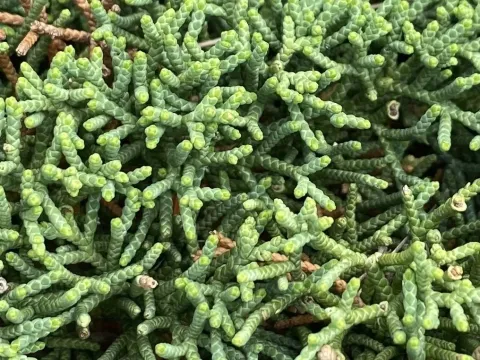
Sargent's juniper
Juniperus sargentii
Sargent's juniper (Juniperus sargentii) is a prostrate evergreen shrub within the Cupressaceae family. It is native to the coastal regions of East Asia, including Japan and the Kuril Islands, where it thrives in rocky, well-drained environments.
What the section contains
Sargent's juniper
This species is highly valued in landscape design as a resilient ground cover plant. It requires full sunlight to maintain its characteristic compact habit and vibrant foliage color, though it can tolerate light shade in hotter climates.
The plant is exceptionally hardy and adaptable to various soil types, provided they are well-draining. It grows successfully in sandy, rocky, or loamy soils and is known for its high tolerance to drought once established in the garden.
Cultural practices involve proper spacing during planting to allow for the horizontal spread of the branches. Regular pruning is not strictly necessary but can be used to direct growth or remove any damaged wood resulting from heavy snow loads.
Fertilization should be done sparingly, using slow-release fertilizers specifically formulated for conifers. Excessive nitrogen application should be avoided, as it leads to weak, succulent growth that is more susceptible to winter damage and pests.
Rust is one of the most common fungal diseases affecting this juniper. It is often characterized by galls on the branches that produce orange, gelatinous spores during wet spring weather, which can significantly damage the plant's structure.
Juniper scale insects are a frequent pest that attaches to the needles and stems, causing yellowing and dieback. Horticultural oils applied during the dormant season are highly effective in controlling populations of these insects.
Spider mites often infest the foliage during hot and dry summer months. Regular monitoring is essential, and washing the foliage with a steady stream of water can help reduce mite populations without the need for heavy chemical intervention.
Tip blight, caused by various fungal pathogens, may occur in areas with high humidity. Proper airflow is the best defense; if symptoms appear, affected branches should be pruned back to healthy wood and tools must be sterilized to prevent spread.
Root rot can occur if the plant is subjected to waterlogged soil conditions for extended periods. Ensuring proper drainage at the planting site is the most critical step in preventing root-related pathologies in Sargent's juniper.