
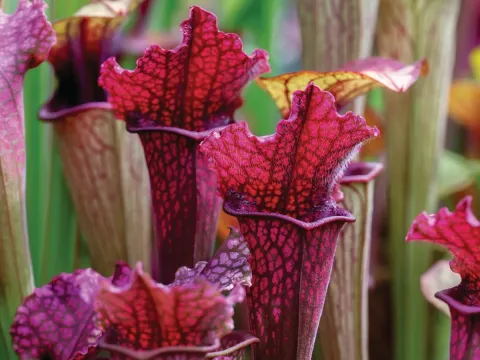
Sarracenia hybrids
Sarracenia hybrids
The propagation of Sarracenia hybrids is primarily performed by rhizome division during the early spring. This allows the plant to establish itself before the peak of the growing season.
What the section contains
Sarracenia hybrids
Seed propagation is also possible but requires a cold stratification period of several weeks. Seeds should be sown on the surface of a peat-based medium without covering them with soil.
Since these are hybrids, seeds will produce offspring with variable traits. For commercial or aesthetic consistency, vegetative division is the standard method used by enthusiasts and nurseries.
When dividing, ensure each segment has a healthy section of the rhizome and roots. Replant them in a sterile, nutrient-free medium to prevent immediate infection of the cut site.
Young plants require stable, humid conditions until they develop mature pitchers. Gentle handling of the root system is essential to ensure quick recovery after transplanting.
Sarracenia hybrids, part of the Sarraceniaceae family, thrive in bog-like conditions. They must be grown in nutrient-poor acidic soil, typically a mixture of peat moss and perlite.
Water quality is of paramount importance; use only distilled, reverse osmosis, or rainwater. The pots should sit in a tray filled with water to maintain constant soil saturation.
Full sun is necessary for the development of vibrant colors and structural integrity of the pitchers. Insufficient light results in elongated, weak growth and poor insect attraction.
A dormant period is vital for the long-term health of the plant. During winter, temperatures should be lowered significantly to mimic the natural season of the native North American habitat.
Fertilization is unnecessary and even dangerous for these plants. They obtain their nutritional requirements by capturing insects, and mineral salts in synthetic fertilizers will burn their roots.
Aphids are a common pest, particularly on the new growth and the inside of the pitchers. They can be controlled through gentle physical removal or appropriate systemic insecticides.
Fungal infections, such as Botrytis or rhizome rot, are typically caused by poor air circulation or overcrowding. Regular cleanup of dead foliage is a critical preventive measure.
Spider mites may affect the plants if the ambient humidity is kept too low. Increasing air moisture or proper greenhouse ventilation is effective for prevention.
Root rot is often the result of using poor-quality water or a medium that has lost its structure. Once root rot occurs, saving the plant becomes very difficult.
Integrated pest management should prioritize cultural controls. Monitoring the plant's environment is the most efficient way to maintain a pest-free and healthy collection.