
Sarracenia readei
Sarracenia readei
Description
Growing requirements
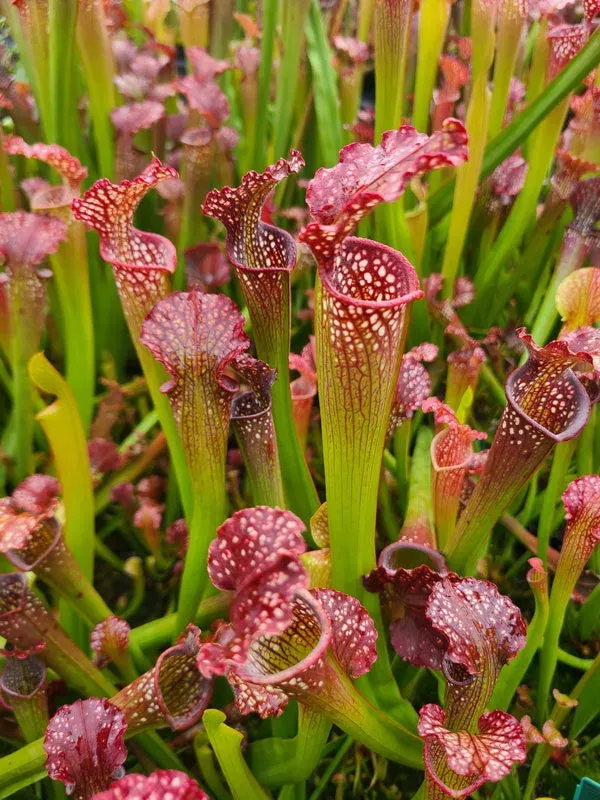
Sarracenia readei is a recognized natural hybrid within the Sarraceniaceae family. It is a specialized carnivorous plant known for its tubular leaves, which function as traps for insects to supplement the plant's nutrient needs in nitrogen-poor soils.
The plant thrives in full sun conditions. A minimum of six to eight hours of direct sunlight is essential for the plant to maintain its structural integrity and the vibrant coloration of the traps, which is vital for hunting.
Cultivation requires a specific soil mix consisting of sphagnum peat moss and perlite or coarse silica sand. This medium must be free of fertilizers, minerals, or lime, as the root system is highly sensitive to chemical additives.
Water quality is of paramount importance for the Sarracenia readei. Only distilled, rainwater, or deionized water should be used. The plant must sit in a tray with a consistent water level to mimic its natural wetland environment.
Winter dormancy is a critical physiological requirement for this species. During this season, the plant must be kept in a cool, bright location with reduced day length to ensure it gathers the energy needed for the next growth cycle.
Main diseases and pests
Aphids and mealybugs are the primary pests that infest the pitchers. These insects feed on the nectar and soft tissues of the leaves, potentially damaging the trapping mechanism and attracting secondary fungal infections.
Fungal pathogens such as Botrytis may develop if the plants are kept in stagnant, humid environments with poor airflow. Maintaining good air circulation is a standard cultural practice to prevent such outbreaks.
Root rot is the most common condition resulting from improper soil drainage or overwatering during the dormant period. Once the rhizome is infected with rot, it is difficult to salvage the plant.
Salt accumulation from tap water is a chemical threat that manifests as stunted growth and blackened roots. Over time, this cumulative stress factor leads to the total loss of the specimen.
Regular sanitation, including the removal of dead or rotting pitchers, is essential for pest and disease control. Clean, sterile tools should be used for any necessary pruning to prevent the spread of pathogens.