
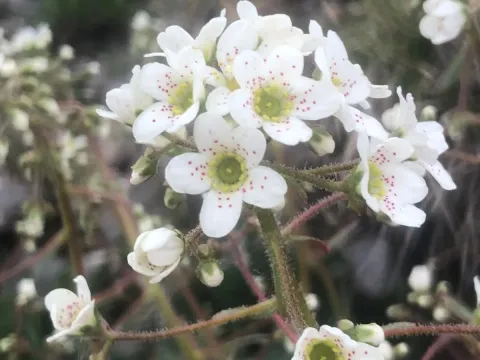
Saxifraga hostii
Saxifraga hostii
Seeds of Saxifraga hostii should be sown in early spring, ideally between March and April. A period of cold stratification for several weeks is often necessary to break seed dormancy and ensure successful germination.
What the section contains
Saxifraga hostii
Use a well-draining, mineral-based sowing substrate. The seeds should be pressed gently into the surface of the soil rather than buried, as they require light to germinate effectively under controlled conditions.
Propagation through division is a more efficient method for established clumps. This process is best performed immediately after flowering, allowing the plant to recover and establish new roots before the onset of winter.
When dividing, gently separate the rosettes while maintaining a small portion of the root system for each division. Plant them into individual small pots or directly into a prepared crevice in a rockery.
Initial watering of new divisions must be managed with care. Maintain consistent soil moisture without waterlogging, as young plants are particularly susceptible to fungal decay during the establishment phase.
Saxifraga hostii is a perennial herbaceous plant belonging to the Saxifragaceae family. Native to the limestone mountains of the Eastern Alps, it is highly prized for its rigid, silver-margined leaves and elegant flower spikes.
This species thrives in well-drained, lime-rich stony soils. It is perfectly adapted to rock gardens, scree beds, or stone walls, where its roots can penetrate deep into the substrate to seek moisture while staying cool.
The plant prefers a cool, sunny position, ideally with exposure to morning sun and protection from the harsh, direct heat of the afternoon. Proper air circulation is critical to mimic its natural montane environment.
Watering should be balanced: the soil should remain moist during the growing season but must never become saturated. Excessive humidity, especially in the crown of the rosette, can be detrimental to the plant's health.
It is remarkably hardy in winter but dislikes excessive moisture around the crown during the dormant season. Providing a layer of granite or limestone grit around the base helps prevent rot and keeps the foliage dry.
Root and crown rot are the most common issues affecting Saxifraga hostii, usually triggered by poor drainage or overwatering. Infected plants should be isolated, and the substrate should be adjusted to improve aeration.
Fungal leaf spot diseases can occur during prolonged wet weather. To mitigate this risk, remove any dead or decaying foliage from the base of the rosettes to ensure that the center of the plant remains dry.
Gastropods such as slugs and snails are frequent pests, particularly in spring when the new, tender shoots emerge. Protective barriers or organic bait can be used to prevent significant foliage loss.
Spider mites may occasionally become a problem in very dry, hot summers, especially if the plants are pot-grown or lack sufficient humidity. A gentle misting of the surrounding air can help prevent infestations.
Regular maintenance, including the removal of spent flower stalks, not only improves the aesthetic appearance of the plant but also reduces the pathways for pathogens to enter the rosette structure.