
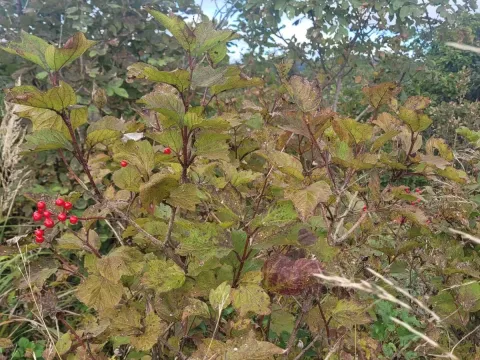
Sargent viburnum
Viburnum sargentii
Sargent viburnum propagation is most effectively performed through vegetative methods: green cuttings, layering, or division of the root clump. Seedlings are best planted in early spring before the start of sap flow or during the leaf fall period in autumn.
What the section contains
Sargent viburnum
When propagating via seeds, long-term stratification is required, which can take up to six to eight months under fluctuating temperatures. Sowing is conducted in loose, nutrient-rich soil in nursery beds, where seedlings may only appear in the second year after sowing.
The choice of planting site should favor semi-shaded areas, as the plant is sensitive to intense, direct midday sunlight. It is crucial to account for the size of the mature bush, which can reach 3 meters in height, necessitating a spacing of at least 2 to 2.5 meters between plants.
Preparing a planting pit of 60x60 cm is mandatory to ensure proper root system development. The bottom should be enriched with a mixture of organic fertilizers, such as well-rotted manure or compost, supplemented with wood ash to stimulate root growth.
After planting, thorough watering and mulching the root zone with peat or wood chips are essential. This maintains soil moisture and prevents weed competition during the early stages of the culture's life.
Sargent viburnum belongs to the Adoxaceae family and is closely related to the common cranberry bush, distinguishing itself with higher decorative value and winter hardiness. It prefers loamy soils with a neutral or slightly acidic pH level.
The plant is moisture-loving; therefore, maintaining stable soil moisture is critical, especially during the flowering and fruit-setting stages. Drought can lead to premature leaf drop and negatively affect the quality of the berries.
This species is well-adapted to the climate of the Russian Far East, Northeast China, and Japan, making it highly resistant to severe winter temperatures. In temperate climates, it easily tolerates frosts as low as -30°C.
Regular sanitary and formative pruning is required for optimal development. This is best done in early spring by removing old, damaged, or congested branches to ensure light penetration deep into the crown of the shrub.
Mineral fertilization is applied twice annually: nitrogen-based fertilizers in spring to stimulate foliage growth, and potash-phosphorus fertilizers in autumn to support dormancy preparation and enhance overall cold tolerance.
Fruit bearing of Sargent viburnum typically begins 4 to 5 years after planting. Yield depends heavily on light exposure and consistent moisture levels; under optimal conditions, a single mature bush can produce between 5 and 8 kg of berries.
Berries are clustered in large corymbose inflorescences and are bright red drupes that ripen in September. The fruit is noted for a specific astringent taste and a high concentration of vitamin C, organic acids, and pectins.
Regarding хозяйственное use, the berries are processed into juices, jellies, jams, and herbal teas. Due to their active compounds, they are widely sought after in both folk and conventional medicine for their health-promoting properties.
Beyond the fruit, the decorative value is a major factor in landscape design. The delicate, lace-like foliage and spectacular autumn colors make it a popular choice for both specimen and group plantings.
The plant possesses high regenerative capacity, allowing one bush to remain productive for 25 to 40 years, provided that proper maintenance and annual rejuvenation pruning of older branches are performed.
The primary pest is the viburnum leaf beetle, which can defoliate the entire shrub in a short period by skeletonizing the leaves. Regular inspection of bushes in May and June allows for the timely detection of egg clusters and larvae.
Aphid infestation is also common, as they feed on the sap of young shoots, causing deformation and curling. Control methods include biological agents and systemic insecticides used in cases of heavy infestation.
Among fungal diseases, leaf spot and powdery mildew are the most significant, developing primarily in conditions of high humidity and poor crown ventilation. Timely pruning helps reduce the environmental infectious load.
- Viburnum leaf beetle
- Aphids
- Powdery mildew
- Phyllosticta leaf spot
- Scale insects
Preventative measures include the thorough removal and disposal of fallen leaves in autumn, where spores and pests overwinter. Spring and autumn applications of Bordeaux mixture are recommended to protect the bark and buds from pathogens.
Harvesting is conducted in dry weather after the berries have fully ripened and turned a deep, bright red. The optimal window is usually late September or early October, depending on the local climate.
Fruits are harvested in full clusters, taking care not to damage the fruit stems, which helps maintain the freshness of the product. Using secateurs or garden shears speeds up the process and prevents the breakage of branches.
For long-term storage, the berries are either frozen or mashed with sugar. Freezing is considered the preferred method, as it significantly reduces the natural bitterness found in fresh berries, similar to the effect of the first autumn frosts.
Transporting the harvested crop must be done in shallow containers to prevent the berries from being crushed and losing juice. In a cool, well-ventilated area, berries can be stored for several weeks.
Before processing, the fruits must be sorted to remove dry, damaged, or unripe berries, ensuring the quality of the entire batch during storage or thermal processing.