
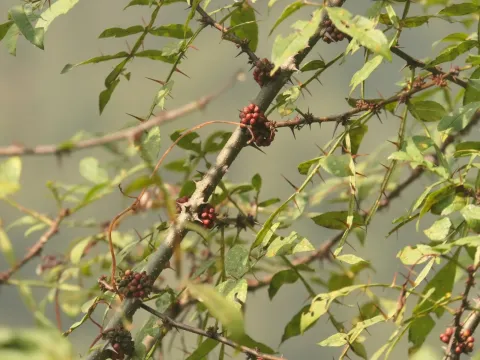
Winged prickly ash
Zanthoxylum armatum
Winged prickly ash (Zanthoxylum armatum) is a member of the Rutaceae family, primarily valued for its aromatic fruits which are widely used as a spice. It is native to the Himalayan region and parts of East Asia.
What the section contains
Winged prickly ash
The plant thrives in full sun but can tolerate partial shade in hotter climates. It requires well-draining, slightly acidic to neutral soil to prevent root issues caused by waterlogging.
Temperature management is crucial; while it is somewhat hardy, it prefers temperate to subtropical conditions. Protection from harsh winter winds is recommended for young specimens.
Propagation is mainly through seeds, which require stratification. The plant develops a robust root system, making it resilient once established in a permanent location.
Proper spacing between plants is essential to allow for good airflow, which is critical for preventing moisture-related diseases in the canopy.
Fungal pathogens such as rust and various leaf spot diseases are common in humid environments, necessitating proactive canopy management.
Insect pests, specifically aphids and scale insects, frequently target the succulent growth during the spring season, reducing overall plant vigor.
Root rot is the most serious threat, usually associated with poor soil drainage and excessive irrigation during dormant periods.
Integrated pest management, including natural predators and selective pruning, is highly effective for maintaining the health of the cultivation area.
Regular monitoring of the foliage helps in early detection of infestations, allowing for localized treatments instead of widespread chemical use.
Harvesting the fruits typically occurs in late summer or autumn. The shells should be bright red or pink, indicating full maturity before they crack open.
Extreme care must be taken during the harvest because the branches of Zanthoxylum armatum are armed with sharp, prominent thorns.
Post-harvest, the fruits are spread out in a dry, shaded area for several days to cure, ensuring the volatile oils are preserved in the husk.
Leaves are harvested selectively throughout the growing season and are often used immediately or dried for infusion and seasoning applications.
Proper storage is vital; once processed, the spice should be kept in airtight containers to maintain its potent flavor and medicinal properties.