
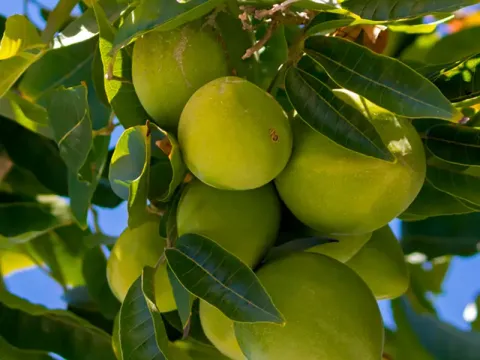
White sapote
Casimiroa sapota
White sapote (Casimiroa sapota) is an evergreen fruit tree belonging to the Rutaceae family. Native to the highlands of Mexico and Central America, this tree is highly valued for its custard-like, nutritious fruits.
What the section contains
White sapote
The plant thrives in subtropical climates. While it is relatively cold-tolerant and can survive light frosts, it prefers regions with stable, mild weather. Protection from strong winds is essential for maintaining a healthy structure and preventing branch damage.
Regarding soil conditions, white sapote performs best in deep, well-drained loams. It is adaptable to various soil types but suffers significantly in waterlogged areas. A neutral to slightly acidic pH level is considered ideal for nutrient uptake.
Irrigation should be consistent, especially during the dry season and the fruit-setting stage. Although established trees show some drought tolerance, regular watering practices significantly improve tree vigor and final crop quality.
For planting, it is recommended to space trees at least 8–10 meters apart. This allows for optimal sunlight penetration and airflow, which is critical for reducing humidity-related diseases within the dense canopy.
The time to first harvest depends on the propagation method. Grafted trees typically start bearing fruit within 3–5 years, whereas seedling trees may take nearly a decade to reach maturity and start producing.
Mature trees are prolific, with average yields ranging from 50 to 150 kg per tree annually. The fruit is appreciated for its creamy, sweet flesh, which offers a unique flavor profile often compared to a blend of banana and pear.
Commercially, the white sapote is primarily sold in local markets. Due to the delicate nature of the ripe fruit, which bruises easily, large-scale long-distance export is quite challenging and requires sophisticated handling.
Balanced fertilization with NPK formulas applied in early spring helps sustain high annual yields. Mulching around the root zone helps conserve soil moisture and suppresses weed growth, contributing to better overall tree performance.
Yields can fluctuate due to weather patterns during the flowering season. Excessive rain or unusually cold spells during pollination can result in poor fruit set, highlighting the importance of site selection in commercial orchards.
White sapote is prone to several common pests including scale insects, mealybugs, and aphids. These pests usually congregate on young shoots and undersides of leaves, causing wilting and poor growth if left untreated.
Fungal diseases like anthracnose and powdery mildew are significant concerns in high-humidity areas. Maintaining good airflow through regular structural pruning is the most effective preventative measure against these infections.
Fruit flies can cause substantial damage to the crop. Using fruit bagging techniques or specialized attractant traps is standard practice for organic growers to ensure the harvest remains free of larvae.
Sanitation within the orchard is vital. Clearing away debris, fallen fruits, and diseased branches prevents the build-up of pathogens that could compromise the health of the entire grove in subsequent seasons.
Monitoring for pest activity should be frequent. Integrating biological control methods, such as encouraging beneficial predatory insects, often reduces the need for chemical applications in mature white sapote orchards.
Harvesting requires extreme care. Fruits must be picked by hand when they show the first signs of color change—from deep green to a softer, yellowish-green hue. This indicates the fruit is approaching maturity.
Since the fruit becomes very soft when fully ripe, it must be handled as carefully as a peach or a plum. Dropping the fruit, even from a short distance, will cause internal bruising and rapid post-harvest decay.
After harvest, fruits should be cooled promptly to prolong shelf life. When kept in a cool, ventilated environment, they can last for about a week, though they are best consumed within a few days of picking.
Transporting the crop is a logistical challenge. Fruits are usually packed in individual cells within crates to prevent crushing. This careful packaging is necessary to maintain the fruit's integrity during transit to markets.
For home consumption or local sales, some farmers harvest the fruit slightly firm and allow it to ripen at room temperature for 2–3 days. This method provides a better window for consumption compared to harvesting fully ripe fruit.