
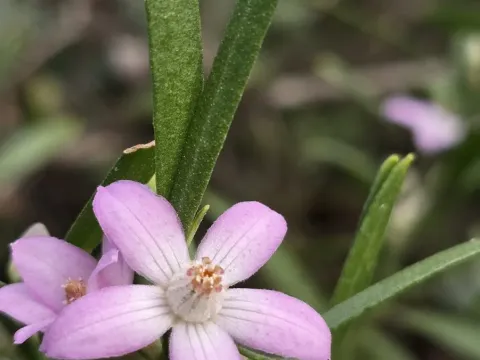
Eriostemon australasius
Eriostemon australasius
The propagation of Eriostemon australasius is primarily achieved through stem cuttings. This method ensures that the young plants retain the desired floral characteristics of the parent stock.
What the section contains
Eriostemon australasius
Cuttings are usually taken from semi-hardwood growth during the late summer or early autumn months. This timing allows the plants to establish a root system before the onset of winter dormancy.
A well-draining medium, typically composed of a mix of coarse sand and peat, is essential for successful rooting. High humidity levels must be maintained during the initial stages of development.
Seeds of this species are known for being difficult to germinate, often requiring specific stratification techniques to break dormancy. Thus, seed propagation is rarely used for commercial purposes.
Once rooted, young plants should be potted into larger containers and grown in a controlled environment until they are strong enough to be moved to permanent beds or landscape sites.
Eriostemon australasius, a member of the Rutaceae family, is a native shrub of Eastern Australia. It is highly valued for its striking pink flowers and aromatic, oil-gland-bearing foliage.
The species requires a sunny location with partial shade to prevent leaf scorch during the hottest parts of the day. Proper light exposure is critical for flower bud initiation.
Soil conditions should be acidic and exceptionally well-drained. Heavy clay soils are unsuitable and will quickly lead to root rot; sandy or loamy soils are ideal for this cultivation.
Watering must be performed with great care. While the plant appreciates consistent moisture, waterlogged roots are a primary cause of failure in its cultivation.
Temperature management is vital; the plant is not frost-hardy and thrives in mild climates. In regions with freezing winters, greenhouse cultivation is the most effective approach.
The primary use of Eriostemon australasius in modern agriculture is as a cut flower. It is a highly sought-after component in professional floristry for its durability.
Yield is determined by the number of high-quality flowering stems harvested from a single plant. Systematic pruning is necessary to maintain a productive and branched framework.
Productivity increases as the shrub matures, provided that the nutrient levels are managed correctly. A balanced fertilizer with a low phosphorus content is recommended for healthy growth.
Quality control during harvest involves selecting stems with uniform bud development. Stems that are too woody or overly immature are discarded to maintain premium market standards.
Market demand for this species often focuses on the cut flower industry, where it is used as a filler or a focal element in long-lasting, exotic floral arrangements.
Root rot caused by Phytophthora species is the most significant threat to Eriostemon australasius. This disease is usually triggered by poor soil drainage and excessive irrigation.
Common pests include scale insects and spider mites, which can proliferate in greenhouse conditions. These pests damage the foliage and can lead to a reduction in overall plant vigor.
Integrated pest management, including the use of horticultural oils or biological controls, is preferred over the heavy application of chemical pesticides to preserve plant health.
Fungal infections can also occur if air circulation is insufficient. Ensuring proper spacing between plants in rows is a fundamental cultural practice for disease prevention.
Monitoring the foliage for discoloration or signs of stress is crucial, as early detection allows for immediate corrective action before the entire crop is impacted.
Harvesting should ideally take place in the cool early morning hours to ensure that the stems are fully turgid and hydrated. This improves the post-harvest longevity of the stems.
Sharp, sanitized pruning shears should be used for all cuts. The base of the stem is often trimmed at an angle to maximize water uptake once the stems are placed in vases.
Stems must be stripped of lower leaves to prevent bacterial buildup in the storage water. This simple step significantly extends the vase life of the floral product.
Post-harvest handling involves placing the stems in a cool, ventilated area. Immediate cooling helps to stabilize the metabolism of the plant and reduces respiration rates.
Packaging for market transport requires boxes that provide protection from dehydration while ensuring enough airflow to prevent the development of mold on the flower buds.