
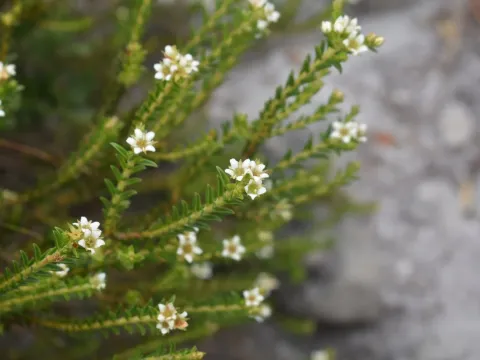
Diosma oppositifolia
Diosma oppositifolia
Diosma oppositifolia is an evergreen ornamental shrub belonging to the Rutaceae family. Native to the Cape Floristic Region of South Africa, the plant has evolved to thrive in Mediterranean-like climatic conditions, characterized by distinct wet and dry seasons.
What the section contains
Diosma oppositifolia
The plant features a compact habit with slender, densely branched stems. Its leaves are small, arranged in an opposite pattern, and contain oil glands that release a strong, pungent fragrance when bruised, a common trait among many members of the Rutaceae family.
Cultivation success depends heavily on well-draining, slightly acidic to neutral soil. Diosma oppositifolia is highly sensitive to waterlogging; therefore, on heavier soils, a robust drainage layer is strictly necessary to prevent root rot and ensure healthy development.
The shrub prefers sunny, sheltered positions protected from harsh winds. In cooler regions, it is frequently grown in containers, allowing for easy relocation to a bright, cool, and frost-free environment during the winter months, as the plant cannot withstand freezing temperatures.
Economically and aesthetically, the plant is primarily utilized in landscape architecture and specialized floriculture. Its long-lasting display of small, star-shaped flowers makes it a highly sought-after species for conservatories, winter gardens, and temperate rockery displays.
The primary threats to Diosma oppositifolia are fungal pathogens, which proliferate in environments with excessive soil moisture and stagnant air. Root rot is a common occurrence if the irrigation regime is not strictly controlled to avoid water retention.
In indoor or greenhouse settings, spider mites pose a significant challenge, particularly during periods of low humidity. Regularly monitoring the underside of the foliage is essential to detect early infestations and prevent rapid colonization by these pests.
Mealybugs are another common pest found on this species, often clustering in the leaf axils. Management involves the use of systemic insecticides or manual removal with a soft brush dipped in a mild alcohol solution to manage local infestations.
To prevent disease spread, it is crucial to ensure adequate spacing between plants to maintain proper air circulation within the canopy. Dense foliage can create pockets of humidity that favor bacterial and fungal growth, making periodic sanitary pruning vital.
Preventative care centers on maintaining a balanced nutrient profile in the substrate. Over-fertilization with nitrogen can produce soft, succulent growth that is significantly more attractive to sap-sucking insects, necessitating a measured and balanced approach to plant nutrition.