
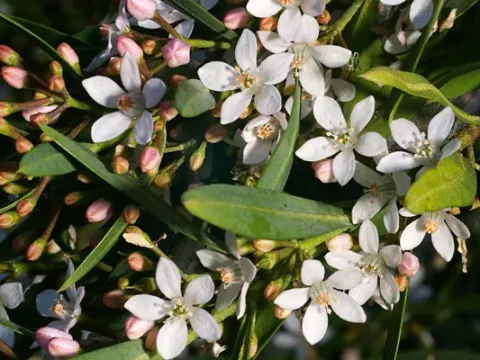
Eriostemon
Eriostemon hybrids
Eriostemon is an evergreen shrub belonging to the Rutaceae family. Native primarily to Australia, these plants thrive in temperate climates and are highly valued for their dense foliage and profuse, often citrus-scented flowers.
What the section contains
Eriostemon
For successful growth, the plant requires a bright location protected from harsh, direct midday sun. In cooler regions, cultivation is primarily restricted to greenhouses or container gardening, as the plant is highly sensitive to frost.
The growing medium for Eriostemon must have excellent drainage properties. A slightly acidic substrate consisting of turf, peat, and coarse sand is considered optimal. Waterlogging at the roots is detrimental and frequently leads to root rot.
During the active growing season, the plant requires regular but moderate irrigation. Using soft, room-temperature water is critical to preventing leaf chlorosis and maintaining healthy foliage.
Temperature management during the winter dormant period is essential, with an ideal range between 10 and 15 degrees Celsius. Providing this cool rest period ensures proper flower bud initiation for the following season.
The primary pests affecting Eriostemon under poor growing conditions include spider mites and mealybugs. These thrive in dry air environments, making regular misting of the crown an effective preventative measure.
In conditions of high soil moisture and poor air circulation, fungal infections may develop. Phytophthora is a significant threat that necessitates immediate correction of watering habits and the use of systemic fungicides.
Foliage may exhibit yellowing due to micronutrient deficiencies or incorrect soil pH. Consistent fertilization using complex minerals tailored for acid-loving plants is key to preventing chlorosis.
Root system damage during repotting is a significant risk, as Eriostemon is highly sensitive to root disturbance. It is recommended to use the "pot-shifting" method, keeping the root ball intact during any necessary transitions.
Regular sanitary pruning is necessary to maintain overall shrub health. Removing dead wood and thinning out dense branches improves airflow through the crown, significantly reducing the likelihood of disease outbreaks.