
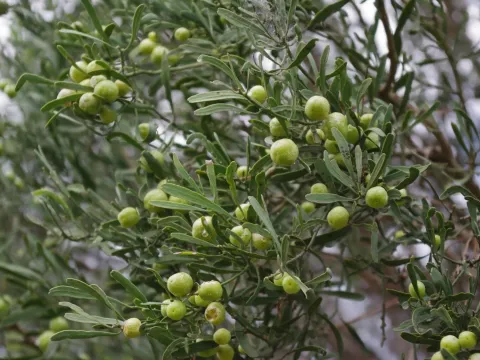
Eremocitrus
Eremocitrus
Eremocitrus, commonly known as the Australian desert lime, is a genus of shrubs or small trees belonging to the Rutaceae family. It is distinct among citrus relatives due to its remarkable adaptation to arid environments, making it one of the most drought-tolerant citrus plants known to science.
What the section contains

Eremocitrus
Native to the semi-arid regions of Australia, this plant exhibits xerophytic characteristics such as reduced leaf size and a thick cuticle, which minimize water loss. Its ability to withstand harsh conditions where temperatures fluctuate significantly makes it a unique subject for evolutionary botanical studies.
The plant requires well-draining, sandy or gravelly soils to thrive. It is extremely intolerant of heavy, clay-rich soils that retain moisture, as such conditions quickly lead to root rot. Successful cultivation relies on mimicking its natural, dry habitat by providing excellent drainage and avoiding over-irrigation.
In addition to drought resistance, Eremocitrus shows high levels of salt tolerance. This trait is highly prized in professional agriculture, where it is used as rootstock to confer improved environmental resilience to commercial citrus cultivars, particularly in regions facing soil salinity issues.
The fruits of the Eremocitrus are small, globular, and possess a intense, zesty flavor profile. They are increasingly sought after by the gourmet culinary industry for use in beverages, jams, and as a specialized flavoring agent, highlighting both its ornamental value and commercial potential.
The primary threat to Eremocitrus is fungal infection of the root system, specifically caused by Phytophthora pathogens. These fungi thrive in damp soil, and their impact is exacerbated if the plant is grown in containers with poor drainage or in areas with high annual rainfall that causes waterlogging.
Pests that commonly affect the species include citrus aphids and scale insects, which feed on the sap of young stems and leaves. If left untreated, these infestations can cause significant leaf drop and reduced plant vigor, making regular inspections and integrated pest management practices essential for healthy growth.