
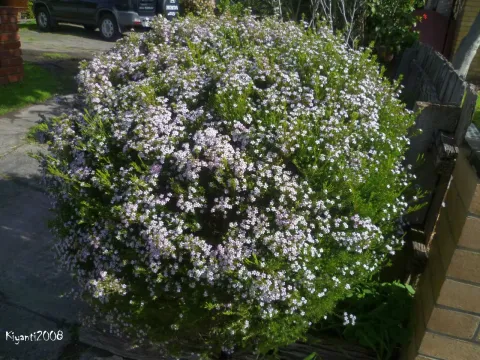
Coleonema
Coleonema hybrids
Coleonema is a genus of evergreen shrubs belonging to the Rutaceae family, native to South Africa. Known for their aromatic, needle-like foliage and profuse blooming, these plants are popular in ornamental horticulture for creating texture and vibrant colour in landscapes.
What the section contains
Coleonema
The natural habitat of this culture is characterized by the Mediterranean climate found in the Cape region. Consequently, the plant is well-adapted to sunshine and requires significant exposure to light to maintain its dense, compact shape and to promote consistent flower production.
For successful cultivation, Coleonema requires well-draining, slightly acidic soil. The plant is highly susceptible to root rot, which makes soil composition critical. Gardeners should ensure that the planting medium does not retain excessive moisture and that pots have adequate drainage holes.
In terms of climatic conditions, Coleonema is not frost-tolerant. In regions with freezing winter temperatures, it must be grown in containers that can be moved to a bright, frost-free shelter, such as a conservatory or greenhouse, during the cold season.
Cultural maintenance involves periodic pruning, typically performed immediately after the flowering period. Light trimming helps to manage the growth habit, encourages bushiness, and prevents the plant from becoming woody or leggy over time, ensuring a healthier and more attractive appearance.
Common pests affecting Coleonema include spider mites and mealybugs, which are particularly problematic in low-humidity environments. Regular inspection and the use of insecticidal soaps or horticultural oils are recommended to keep pest populations under control.
Diseases such as root rot are primary threats, typically induced by poor drainage or overwatering. Maintaining a proper watering schedule, where the soil is allowed to dry slightly between applications, is the most effective preventative measure against fungal pathogens.