
Corsican rue
Ruta corsica
Description
Growing requirements
Corsican rue (Ruta corsica) is a rare perennial species belonging to the Rutaceae family. It is endemic to the island of Corsica, historically found in rocky terrains and mountainous regions where it has adapted to harsh environmental conditions.
The plant thrives in nutrient-poor, rocky, and alkaline soils. Proper drainage is the most critical factor for its cultivation, as the species is highly susceptible to root rot if the soil moisture level remains consistently high.
Regarding climate, it requires full sun exposure and is well-adapted to the Mediterranean climate, characterized by dry, hot summers. In non-native environments, it must be protected from frost, as it lacks the winter hardiness found in other, more widespread rue species.
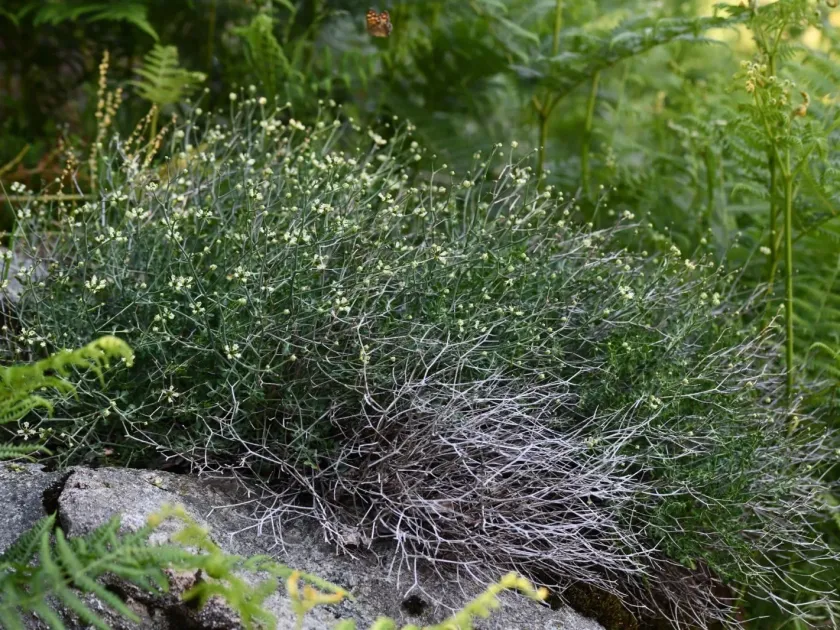
Botanically, it is characterized by its glaucous, deeply divided pinnate leaves and a woody stem base. The entire plant is rich in volatile oils, which are stored in secretory glands, providing a potent scent that serves as a natural deterrent against many herbivores.
Agricultural techniques focus on maintaining low nitrogen levels in the soil to preserve the quality of its secondary metabolites. High-intensity light is essential for the synthesis of oils, making open, unobstructed fields the best locations for planting.
Harvesting
Harvesting is performed during the peak flowering period when the essential oil content is highest. Only the fresh green growth is collected, leaving the woody structural stems intact for the plant to regenerate in the following season.
After harvesting, the herb must be dried immediately in a ventilated, shaded area to prevent oxidation of the essential oils. The process ensures the preservation of the chemical profile necessary for commercial or medicinal utility.