
Crowea
Crowea Sm.
Crowea is a genus of evergreen shrubs belonging to the Rutaceae family. Native to Australia, these plants are primarily found in the forested regions of the eastern part of the continent.
What the section contains


Crowea
Successful cultivation requires a mild, temperate climate, as the plant is not frost-tolerant. The optimal temperature range for the active growth of Crowea is between +15°C and +25°C, and the plants are highly sensitive to sudden fluctuations in temperature.
The plant thrives in well-drained, slightly acidic to neutral soils rich in organic matter. Waterlogging is detrimental to the root system, so proper drainage layers, such as expanded clay or gravel, are essential whether the plant is in a pot or open ground.
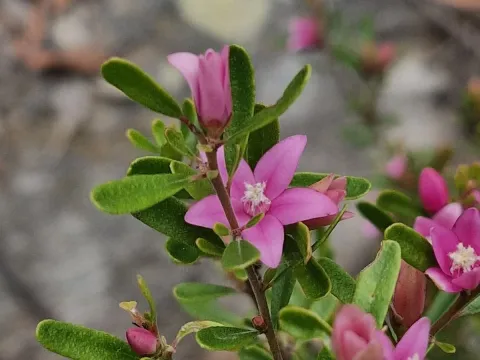
Botanically, Crowea is characterized by narrow, lanceolate leaves that emit a distinct citrus aroma when crushed, which is typical for the Rutaceae family. The flowers usually possess five petals and come in shades of pink, white, or purple, contributing to its popularity as an ornamental plant.
The economic use of Crowea is primarily focused on ornamental horticulture. It is widely used in landscape design in frost-free regions and as a potted specimen in greenhouses and conservatories due to its prolonged flowering season.
The primary threats to Crowea include fungal diseases, such as root rot and phytophthora, which typically develop in conditions of excessive soil moisture or poor drainage.
Regarding insect pests, the plant is most susceptible to spider mites and mealybugs, which tend to infest young shoots and the undersides of leaves when kept in environments with low humidity.