
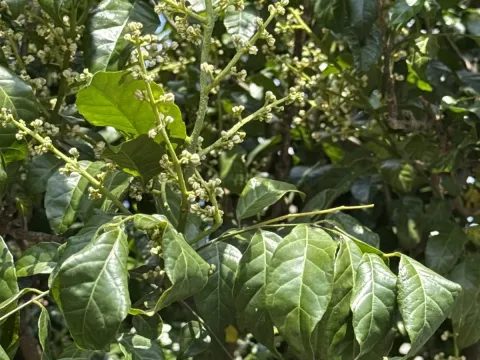
Clausena
Clausena
Propagation of Clausena is primarily achieved through seeds or stem cuttings. It is recommended to sow seeds immediately after harvest, as they possess low longevity and lose their germination capacity quickly.
What the section contains


Clausena
A light, well-draining substrate rich in organic matter should be used for sowing. Seeds should be planted at a depth of no more than 1–2 centimeters to ensure optimal oxygen access.
The ideal temperature for germination ranges between +22 and +26 degrees Celsius. Maintaining stable soil moisture is critical, though waterlogging must be avoided to prevent embryo rot.
For vegetative propagation, semi-hardwood cuttings about 10–15 centimeters in length are utilized. These should be kept in a greenhouse environment with high humidity until successful rooting occurs.
Transplanting to the permanent location should take place once the risk of spring frost has passed. Plants require sufficient space to thrive, as mature specimens can grow quite large.
Clausena belongs to the Rutaceae family and naturally prefers tropical or subtropical climates. The plant is extremely sensitive to low temperatures and cannot withstand frost or frozen soil.
The crop requires bright sunlight, although young plants may tolerate light shade. Direct sunlight promotes the accumulation of essential oils in the leaves, which is crucial for aromatic species.
The soil should have a neutral to slightly acidic pH level. Loam or sandy loam soils with high humus content and excellent permeability are considered ideal.
Regular irrigation is necessary during dry spells. Excess moisture around the root zone can negatively impact development, making high-quality drainage on the plot a mandatory requirement.
In regions with temperate climates, cultivation is only possible in protected environments or as a container plant that can be moved to a warmer area during winter.
The primary pests affecting Clausena include sap-sucking insects. Aphids, spider mites, and scale insects are the most common threats found on the foliage.
Fungal diseases, such as root rot and anthracnose, can affect the plantings if humidity levels are poorly managed or ventilation is inadequate. Prevention centers on irrigation control and timely weeding.
In the event of a significant pest outbreak, it is recommended to use biological insecticides that are safe for use on culinary or medicinal crops.
Crop rotation and maintaining proper spacing between plants are vital elements of plant health management. Dense planting creates air stagnation, which facilitates the development of pathogenic flora.
Regular inspection of the underside of the leaves allows for the early detection of localized infestations, enabling intervention before significant damage occurs to the harvest.
Harvesting Clausena leaves is done as they reach maturity. Young leaves possess the most intense aroma, so harvesting in the early morning after dew evaporates is highly recommended.
For culinary purposes, only healthy, pest-free shoots should be plucked. Periodic pruning stimulates branching and increases the total biomass of the plant throughout the growing season.
Drying the collected material must be carried out in a well-ventilated area protected from direct sunlight. This preserves the essential oils and the plant's characteristic chemical profile.
Fruits of certain Clausena species are also edible and may be collected once they reach their characteristic color. Careful handling is required during fruit collection to prevent damaging fragile branches.
Long-term storage requires airtight packaging, as aromatic compounds are volatile and degrade rapidly upon exposure to air and light.