
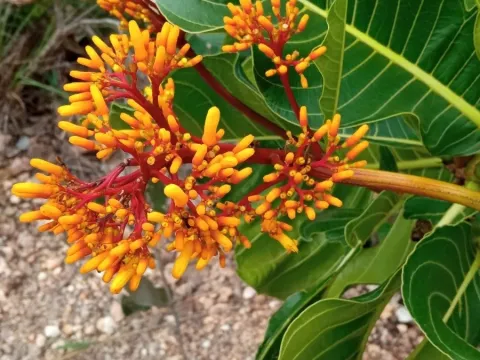
Palicourea
Palicourea
Palicourea belongs to the Rubiaceae family, a diverse group of flowering plants commonly found in the tropical regions of the Americas. As a genus, it is composed of evergreen shrubs and small trees that typically inhabit the dense understory of tropical rainforests.
What the section contains
 Palicourea coriacea
Palicourea coreacea
Palicourea coriacea
Palicourea coreacea
 Palicourea crocea
Palicourea gardenioides
Palicourea gardenioides
Palicourea grandiflora
Palicourea grandiflora
Palicourea juruana
Palicourea juruana
Palicourea crocea
Palicourea crocea
Palicourea gardenioides
Palicourea gardenioides
Palicourea grandiflora
Palicourea grandiflora
Palicourea juruana
Palicourea juruana
 Palicourea longipedunculata
Palicourea macrobotrys
Palicourea macrobotrys
Palicourea longipedunculata
Palicourea longipedunculata
Palicourea macrobotrys
Palicourea macrobotrys
 Palicourea marcgravii
Palicourea paraensis
Palicourea paraensis
Palicourea marcgravii
Palicourea marcgravii
Palicourea paraensis
Palicourea paraensis
 Palicourea rigida
Palicourea rigida
Palicourea rigida
 Palicourea squarrosa
Palicourea squarrosa
Palicourea squarrosa
 Palicourea tomentosa
Palicourea tomentosa
Palicourea tomentosa
 Palicourea triphylla
Palicourea triphylla
Palicourea triphylla
Palicourea
The botanical structure of Palicourea is marked by opposite, simple leaves and characteristic inflorescences that carry tubular flowers. These flowers, often in shades of yellow, orange, or red, have evolved specific adaptations to attract local pollinators, predominantly hummingbirds.
Environmental requirements for this culture are strictly tropical. The plants thrive in environments with consistent temperatures, typically ranging from 20 to 28 degrees Celsius, and are highly intolerant of frost or significant cold stress, which can lead to rapid tissue damage.
For optimal growth, the substrate must be highly porous and rich in organic matter. A well-draining soil mix is critical, as stagnant water at the roots significantly increases the risk of fungal infections, which are common in these species when cultivated in artificial environments.
Agrotechnical management requires consistent humidity and regular nutrient application. During the growing season, a balanced fertilizer should be provided to support the development of vibrant foliage and flowers, mirroring the nutrient-rich conditions of tropical forest floors.
Root rot is the most prevalent threat to Palicourea, primarily caused by improper watering techniques. Over-saturation of the soil leads to an anaerobic environment, which triggers the development of pathogenic fungi that quickly attack the root system.
Pests such as spider mites and mealybugs frequently infest plants kept in greenhouse or indoor environments. These pests thrive in dry conditions and can cause severe damage by depleting the sap from the plant's vascular system, leading to stunted growth.
Integrated pest management strategies are recommended, including biological controls and targeted application of systemic insecticides. Regular inspection of the undersides of leaves is essential for detecting early signs of infestation before it spreads.
Physiological stressors, including light burn or nutrient deficiencies, are common issues when the plant is not kept within its specific environmental niche. Proper shading and monitoring of substrate pH are vital to maintaining the health and resilience of the culture.
Maintaining a clean growing environment is the best defense against disease outbreaks. Sterilizing tools and preventing the introduction of infected plant material are standard protocols to ensure the long-term success of the cultivation process.