
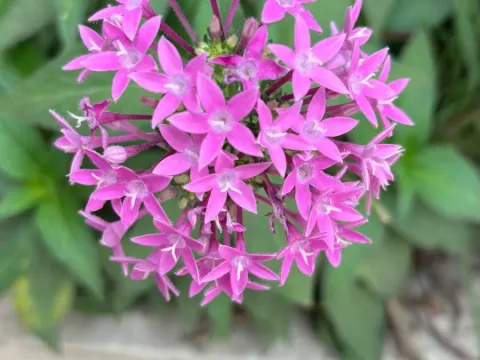
Pentas
Pentas Benth.
Sowing Pentas seeds is typically carried out in late winter or early spring to ensure the plants are ready for blooming by the summer season. A stable temperature between 20–25 degrees Celsius is essential for successful germination.
What the section contains

Pentas
Seeds are sown on the surface and should not be buried deep in the substrate, as they require light for optimal germination. Containers should be covered with glass or film to maintain high humidity levels.
Seedlings emerge unevenly, usually within two to three weeks after sowing, provided the temperature regime is maintained. It is crucial to provide the seedlings with sufficient lighting immediately upon emergence.
Pricking out of the seedlings is performed when the first two to three true leaves appear, transferring them into individual pots. This practice allows the root system to develop more vigorously without competition for nutrients.
To form a bushy plant, seedlings are often pinched, which stimulates side branch growth. This horticultural technique allows for a more compact plant with a higher density of blooms.
Pentas belongs to the Rubiaceae family and naturally occurs in tropical regions of Africa and the Arabian Peninsula. In horticulture, it is highly valued for its long-lasting flowering and vibrant star-shaped clusters.
The plant has high lighting requirements and prefers bright, indirect light. In conditions of insufficient sun exposure, stems become leggy, and the intensity of flowering decreases significantly.
The soil mix for Pentas should be lightweight, nutrient-rich, and have excellent aeration. Using substrates based on sphagnum peat with the addition of perlite or vermiculite is optimal for drainage.
The crop is moisture-loving but reacts extremely negatively to waterlogged roots. Watering should be regular, allowing the top layer of soil to dry out, and excess water must be drained from the saucer.
The ideal temperature for vegetative growth is 20–28 degrees Celsius, and the plant cannot tolerate even short-term frost. During the winter period, it is vital to keep temperatures above 15 degrees to avoid stress.
The main pests of Pentas in controlled environments include spider mites and mealybugs. These insects multiply rapidly when humidity levels are inadequate or temperatures are too high.
Under waterlogged soil conditions, the plant is prone to fungal diseases, particularly root rots. Prevention consists of strictly following a balanced irrigation regime and ensuring a high-quality drainage layer.
In case of infestation by aphids or whiteflies, systemic insecticides are necessary to effectively manage these pests within greenhouses. Regular inspection of the undersides of leaves is highly recommended.
Leaf chlorosis often indicates a deficiency of micronutrients, especially iron, or a pH imbalance in the soil. It is recommended to use specialized fertilizers for flowering plants enriched with chelated complexes.
To prevent the spread of infections, all pruning tools should be disinfected before use. Affected plant parts should be removed immediately and disposed of to maintain hygiene.