
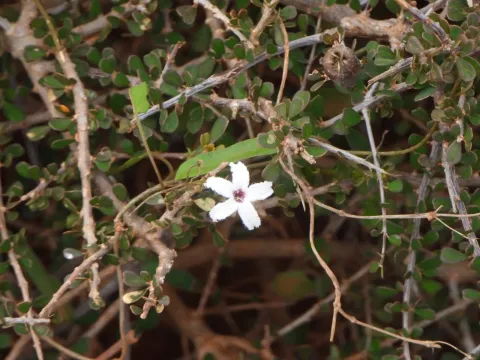
Paederia
Paederia
Paederia, a genus within the Rubiaceae family, consists of perennial tropical vines. While seeds germinate naturally after the rainy season, controlled cultivation requires spring sowing in a protected environment or greenhouse.
What the section contains


Paederia
Successful germination demands a stable temperature range of 22–25 degrees Celsius. The sowing substrate must be lightweight, well-draining, and rich in organic matter to foster initial root development.
Seeds should be planted at a depth of no more than 0.5–1 centimeter. Maintaining constant soil moisture is essential, though one must avoid waterlogging to prevent seed decay during the early stages of growth.
Once two pairs of true leaves emerge, the seedlings are transplanted into individual containers. The plant exhibits high growth energy, allowing it to develop a robust vegetative mass by the end of the first season.
For vegetative propagation, woody cuttings are used, which root effectively in sand or perlite. This method ensures faster establishment of the crop while preserving the specific traits of the parent plant.
Paederia is a heat-loving crop native to the regions of East and Southeast Asia. It thrives in tropical and subtropical climates characterized by high humidity and requires protection from harsh, direct sunlight.
The plant adapts well to various soil types, but achieves peak performance in fertile loams with a neutral to slightly acidic pH. The provision of trellises or supports is a critical requirement due to the vine's climbing nature.
Light is a significant factor for development. While the vine can tolerate partial shade, it requires diffused yet intense sunlight to maximize the synthesis of bioactive compounds and support prolific flowering.
The culture is highly sensitive to cold temperatures. Exposure to temperatures below +5 degrees Celsius can result in leaf drop or total plant mortality, necessitating greenhouse conditions in temperate climates.
Irrigation should be consistent and thorough during the active growing season. During the dormant period or cooler months, watering must be significantly reduced to maintain only slight moisture in the root ball.
The economic value of Paederia lies primarily in its phytochemical profile. The yield of green biomass can reach substantial volumes under intensive cultivation conditions intended for pharmaceutical supply.
The leaves and roots contain specific iridoid glycosides and alkaloids. Harvesting for raw material is typically performed in the second year when vegetative biomass hits peak concentrations of active compounds.
In folk medicine and pharmacology, dried leaves and stems are the primary products. The yield of dried raw material is approximately 20–25 percent of the total fresh harvest weight, which is commercially viable.
The root system is also highly valued. In mature plants aged 3–4 years, the roots accumulate a higher density of bioactive compounds compared to the aerial parts of the vine.
To ensure consistent yield, plantations should be rotated or replanted every five years. This periodic renewal prevents soil depletion and maintains the high quality of the medicinal plant material.
Common pests affecting Paederia include sucking insects such as aphids and spider mites. These parasites thrive in low-humidity conditions, making regular misting an effective preventive measure.
Fungal diseases, particularly root rot, pose the greatest threat, usually resulting from overwatering or poorly drained substrates. Infection leads to stunted growth and premature chlorosis of the foliage.
Powdery mildew may occur if ventilation is inadequate within greenhouses or indoor growing facilities. High planting density can further exacerbate this issue by limiting airflow around the vines.
Integrated pest management strategies, utilizing biological agents or plant-based extracts, are preferred to maintain the ecological purity of the crop, which is crucial for medicinal end-use.
Disease prevention protocols include strict crop rotation, sanitization of pruning tools, and the timely removal of any dead or damaged vine sections that could serve as breeding grounds for pathogens.
Harvesting of leaves is conducted through selective pruning just before the onset of active flowering. This timing ensures that the concentration of medicinal compounds in the plant tissues is at its maximum.
Harvested shoots are bundled and dried in a well-ventilated, shaded environment. Direct UV exposure must be avoided to prevent the degradation of the delicate compounds responsible for the plant's efficacy.
Roots are harvested in the autumn after the vegetative cycle concludes. They are thoroughly washed to remove soil, sliced into 5–10 centimeter segments, and dried in controlled thermal cabinets.
After dehydration, the material is milled or stored in airtight containers. Proper storage protocols allow the plant material to maintain its quality and potency for up to two years.
During harvest, it is vital to retain part of the root system or basal buds to allow for plant regeneration in the following season, assuming a perennial management strategy is employed.