
Palicourea guianensis
Palicourea guianensis
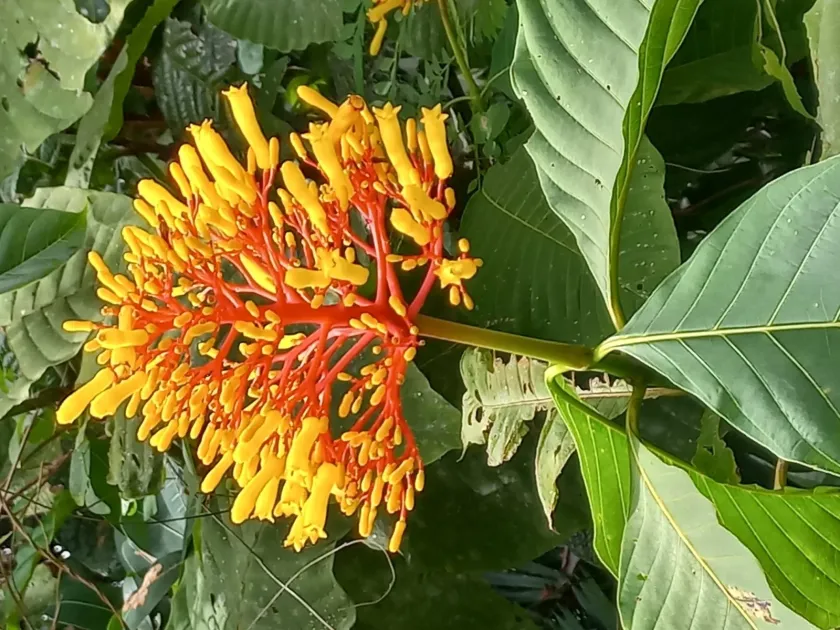
Description
Sowing dates
Palicourea guianensis typically propagates via seeds, which must be sown immediately after maturation due to their limited viability in dry conditions.
In controlled nursery environments, seeds are placed in moist, organic-rich media and kept at consistently high tropical temperatures to facilitate germination.
Optimal sowing occurs at the onset of the rainy season to capitalize on naturally high humidity levels, which are critical for the initial growth phase.
The seeds require light to germinate effectively, so they should not be buried deep within the substrate, but rather pressed gently into the surface.
Proper spacing is essential to allow seedlings sufficient room for development before they are transplanted to their permanent growing locations.
Growing requirements
This species, belonging to the Rubiaceae family, requires a tropical climate with temperatures rarely dropping below 20 degrees Celsius year-round.
High relative humidity is necessary for the plant to thrive, as it naturally occurs in the understory of dense tropical forests.
The soil must be well-draining, slightly acidic, and rich in decomposed leaf litter, mimicking the nutrient cycles of its native forest environment.
While the plant can tolerate partial shade, it requires filtered light to encourage consistent flowering and healthy foliage development.
Regular irrigation is vital, as the root system is sensitive to prolonged dry spells, which can lead to stress and inhibited physiological function.
Yield
The yield of Palicourea guianensis is primarily focused on its biomass and, in some contexts, its potential medicinal extracts or aesthetic value.
Under optimal conditions, the plant produces fruit clusters that serve as a natural resource for local ecosystems and potential botanical collection.
Harvesting strategies are usually determined by the specific use case, whether for ornamental purposes or the study of secondary metabolites.
Annual growth rates depend heavily on soil fertility and the frequency of supplemental organic fertilization provided to the shrub.
Consistent maintenance, including canopy management and weed control, ensures that the plant remains productive throughout its lifespan.
Main diseases and pests
Fungal pathogens represent the most significant threat to the plant, often proliferating rapidly in the high-humidity environments where it grows.
Pests such as mealybugs and scale insects can attach to stems and leaf undersides, drawing sap and weakening the plant's structural integrity.
Root rot is a common issue if the growing medium lacks adequate drainage, especially during periods of excessive rainfall or over-irrigation.
Leaf-feeding caterpillars can cause significant defoliation, particularly in young plants that have not yet established a robust canopy.
Integrated pest management, including regular inspection and the use of natural predators, is recommended to keep pest populations at bay.