
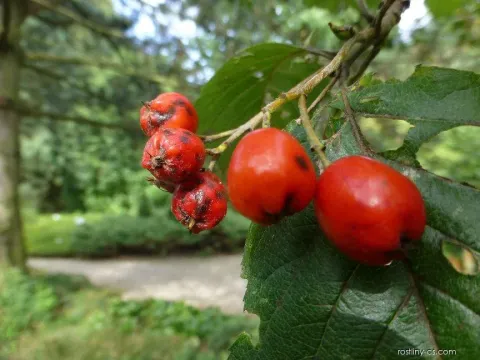
Host's whitebeam
Sorbus hostii
Host's whitebeam is a distinct hybrid species belonging to the Rosaceae family. It typically grows as a small deciduous tree or a dense, rounded shrub, reaching heights of 2 to 4 meters. Its compact size and attractive foliage structure make it a perfect selection for urban gardening and small residential landscapes.
What the section contains
Host's whitebeam
Originating from the mountainous regions of the Alps in Central Europe, this plant is well-adapted to cooler climates. Its evolutionary history in rocky, alpine environments contributes to its resilience against low temperatures. It serves as an excellent ornamental plant for regions with cold winters and temperate summers.
In terms of cultivation, Host's whitebeam requires well-drained, fertile soil. It thrives in loamy or sandy soil types with a neutral to slightly acidic pH level. The plant is relatively tolerant of various soil textures, provided that the drainage system is effective enough to prevent waterlogging, which could cause root stress.
Agricultural management includes consistent watering during the establishment phase and occasional fertilization in early spring to support vigorous growth. Pruning should be kept to a minimum, focusing on removing deadwood or maintaining the desired crown shape. Such care ensures the plant retains its aesthetic appeal year-round.
The primary use of this species is ornamental landscape design. Its visual characteristics—including spring flowers and autumnal fruit—provide seasonal interest to any garden setting. Furthermore, the tree is often utilized in ecological landscaping to attract biodiversity, as its berries provide a food source for local bird populations.
Host's whitebeam may be susceptible to common fungal issues like powdery mildew and scab. Implementing a proper management strategy involves choosing a site with good air circulation and using targeted fungicides if symptoms appear. Removing fallen leaves during the autumn is a critical step to prevent recurring infections.
Insect pests such as aphids or leaf-feeding beetles occasionally infest the foliage. Monitoring the tree regularly allows for early intervention using horticultural soaps or systemic insecticides. By maintaining the tree’s overall vitality through proper nutrition and hydration, the risk of significant damage from pests is drastically reduced.