
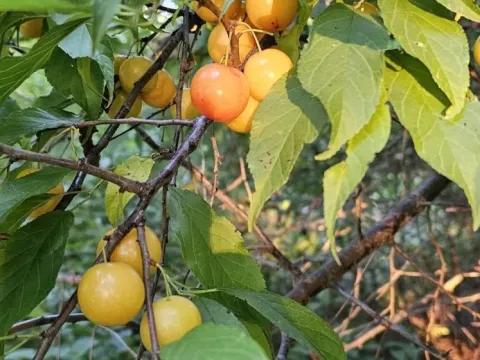
Hortulan plum
Prunus hortulana
The Hortulan plum (Prunus hortulana), a member of the Rosaceae family, is a deciduous fruit-bearing tree native to North America. It is highly valued in pomology for its robustness and ability to thrive in various soil types, making it a reliable choice for commercial and home orchards.
What the section contains
Hortulan plum
This species requires full sun exposure to ensure optimal fruit production and quality. It is adaptable to a wide range of soil conditions, although it performs best in well-drained, fertile loamy soils that maintain consistent moisture levels throughout the growing season.
Regarding climate, Prunus hortulana is characterized by its significant cold hardiness. However, like most stone fruits, it is sensitive to late spring frosts during the blooming stage. Adequate air circulation is crucial to prevent the accumulation of cold air and moisture around the canopy.
Cultural practices include a balanced fertilization program focusing on nitrogen in early spring to support canopy growth and potassium during fruit development. Mulching around the base of the tree is recommended to conserve soil moisture and suppress competitive weed growth.
Pruning is essential to maintain tree health and ensure that sunlight reaches the inner branches. By removing dead wood and thinning out dense foliage, growers reduce the risk of humidity-related pathogens and encourage the development of strong, productive scaffolds.
The fruit of the Hortulan plum is used primarily for fresh consumption and processing. Because of its intense flavor profile and good pectin content, it is frequently utilized in jams, jellies, and baking, providing a distinct culinary experience compared to common plum varieties.
Yield productivity is heavily dependent on effective pollination, as many cultivars are not self-fertile. Ensuring the presence of suitable pollinator varieties within the orchard design is a fundamental strategy for achieving high yields and uniform fruit sets annually.
Prunus hortulana is susceptible to typical stone fruit diseases such as brown rot (Monilinia) and shot-hole fungus. Integrated pest management (IPM) strategies, including strict sanitation measures and the timely application of fungicides, are necessary to protect orchard health.
Common insect pests include plum curculio, aphids, and various species of mites. Monitoring programs using pheromone traps allow for the precise timing of insecticide applications, reducing the overall chemical load and protecting the orchard's beneficial insect population.
Harvesting should occur when the fruit reaches the desired color and firmness, depending on its intended use. Careful handling is required to prevent bruising and skin breakage, which significantly reduce shelf life and market value of the harvested produce.