
Holmes' hawthorn
Crataegus holmesiana
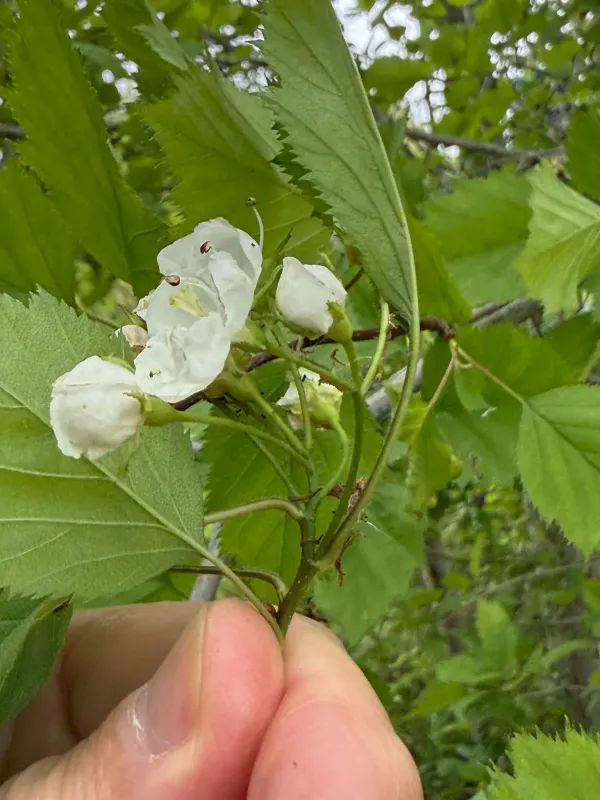
Description
Sowing dates
Sowing Holmes' hawthorn seeds is typically conducted in the autumn, immediately following the harvest of the mature fruits. This practice allows the seeds to undergo natural stratification in the soil over the winter months, which is essential for successful germination.
If seeds are harvested later in the season, they must undergo artificial stratification at temperatures between 1 and 5 degrees Celsius for three to six months. Failure to stratify the seeds often results in very poor germination rates due to the tough, impenetrable seed coat.
Spring planting of saplings with a protected root system is highly recommended, especially in regions characterized by harsh winter conditions. Planting should be planned for the period when the soil has warmed up but before the buds have begun to grow actively.
When establishing a fruit orchard, spacing between trees should be at least 3 to 4 meters. Holmes' hawthorn develops a wide-spreading crown, and overcrowding can lead to poor aeration and light penetration, negatively impacting the tree's overall health and yield.
Propagation can also be achieved through grafting onto standard hawthorn or mountain ash rootstocks. This method is preferred for garden settings as it allows for the faster production of fruit-bearing trees while maintaining consistent variety characteristics.
Growing requirements
Holmes' hawthorn is a deciduous shrub or small tree belonging to the Rosaceae family. It is native to North America, naturally found along forest edges and in moist, nutrient-rich soils that support its robust growth.
The culture demonstrates strong winter hardiness and is capable of thriving in temperate latitudes. The tree prefers open, sunny locations, as shaded environments lead to thinning of the crown and a significant decrease in berry production.
Soil requirements for this species include adequate drainage, as the plant is intolerant to waterlogged conditions that can cause root rot. Ideal soils are loams with a neutral or slightly acidic pH level.
Nutrient availability is critical for plant development. Incorporating organic amendments such as well-rotted manure or high-quality compost promotes vigorous shoot growth and ensures the development of large, high-quality fruits.
While the tree is drought-tolerant once established due to its deep root system, regular watering is essential during the initial growth stages, especially during hot and dry summer periods to ensure survival.
Yield
The fruits of Holmes' hawthorn are bright red or deep crimson berries with juicy flesh, typically ripening in late August or early September. They are characterized by a pleasant, sweet-tart flavor profile.
Yield capacity is largely dependent on the age of the tree and the environmental conditions. With proper care and agronomic management, a mature tree can produce between 10 and 20 kilograms of fruit per season.
Regular pruning is a vital factor in stimulating high yields. Cutting back annual growth encourages the tree to produce a higher volume of fruiting buds for the subsequent season, improving overall productivity.
Thinning the canopy by removing dead, damaged, or inward-growing branches helps maintain proper airflow and ensures even sunlight distribution, which is necessary for uniform ripening of the berries.
These berries are highly valued for processing. They are commonly used to create jams, jellies, marmalades, and infusions, providing a unique aroma and high concentrations of beneficial nutrients.
Main diseases and pests
The primary threats to Holmes' hawthorn include fungal diseases such as powdery mildew and leaf rust. In periods of high humidity, these pathogens can quickly spread and affect a large portion of the foliage.
Common pests include the hawthorn sawfly, whose larvae can skeletonize the leaves, as well as aphids, which feed on the sap of young shoots, potentially weakening the plant if infestations are not managed.
To control diseases, it is recommended to apply copper-based fungicides as a preventative measure in early spring and autumn, after the leaves have dropped.
Maintaining sanitary conditions in the orchard is crucial. Removing fallen leaves from underneath the canopy helps eliminate overwintering fungal spores, thereby reducing the risk of re-infection in the following growing season.
In cases of severe pest infestation, the application of systemic insecticides is warranted. These treatments should ideally be applied before the flowering period to avoid negatively impacting pollinators.
Harvesting
Harvesting should be conducted at the stage of biological maturity, when the fruits have achieved their characteristic vibrant color and the flesh has softened. Under-ripe fruits are typically too astringent and firm for culinary use.
Manual harvesting is the most common method, using small garden combs or picking by hand. Due to the presence of sharp thorns on the branches, protective gloves are essential to ensure the safety of the worker.
The fruits have a relatively short shelf life in their fresh state and should be processed within 2 to 3 days. If stored in a cool place, they can maintain their quality for up to one week.
For long-term storage, the berries can be frozen or dried using specialized dehydrators. Dried hawthorn is widely utilized in traditional medicine and as an ingredient in various herbal teas.
It is important to avoid damaging the skin during the harvesting process, as any ruptures significantly decrease the storage duration and accelerate the onset of spoilage and decay.