
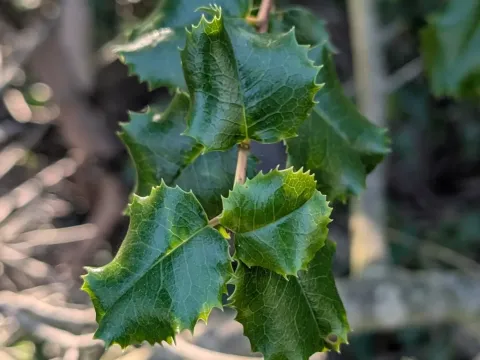
Hollyleaf cherry
Prunus ilicifolia
Sowing Hollyleaf cherry seeds is best performed in the fall, allowing for natural cold stratification during winter months. This mimics the environmental conditions required for successful germination in the spring.
What the section contains
Hollyleaf cherry
For container-grown plants, seeds should be stratified in a refrigerator at 4°C for two to three months. A well-draining potting medium should be used to prevent waterlogging and seed rot during the dormant phase.
Spring planting requires soaking the seeds beforehand to soften the seed coat. However, fall sowing is widely considered the most effective method for establishing healthy seedlings in a home nursery setting.
Propagation via cuttings is notoriously difficult and rarely attempted due to the plant's specific physiological growth cycles. Therefore, seed propagation remains the standard practice for nurseries specializing in native species.
Young seedlings grow quite slowly, requiring careful attention to light and moisture levels. Protection from extreme heat or direct intense sunlight is necessary until the root system is well-established.
Prunus ilicifolia, commonly known as Hollyleaf cherry, belongs to the Rosaceae family. It is an evergreen shrub or small tree native to the coastal regions of California and Baja California.
The plant thrives in well-drained soils, including sandy and rocky substrates. It exhibits remarkable drought tolerance, making it an excellent candidate for water-wise landscaping and xeriscaping projects.
It prefers full sun exposure but can adapt to partial shade in hotter climates. Adequate air circulation is crucial to maintain plant health and prevent the development of common fungal issues.
Climatic requirements focus on mild, frost-free winters and warm, dry summers. The species is sensitive to extreme cold and stagnant air, which can stress the plant and reduce its aesthetic appeal.
Agricultural management is minimal, as the species is adapted to nutrient-poor soils. Over-fertilization can actually be detrimental, promoting excessive foliage growth that may weaken the shrub's structure.
Powdery mildew is a common threat, especially in coastal areas with high humidity. Proper spacing and selective pruning to improve airflow significantly reduce the risk of infection.
Scale insects and aphids can infest the branches and young leaves, potentially leading to soot mold development. Integrated pest management, including the use of neem oil or biological controls, is recommended.
Root rot caused by Phytophthora species is a serious danger if soil drainage is compromised. Monitoring soil moisture and ensuring the plant is not sitting in standing water are essential preventive steps.
Wildlife, particularly deer, may browse on the foliage, necessitating protective fencing or deterrents during the first few years of growth. This is especially important when establishing the plant in native habitats.
Environmental stress, such as incorrect pH levels, can lead to nutrient deficiencies like chlorosis. Regular soil testing helps maintain the proper balance for optimal uptake of vital minerals.
The fruit of the Hollyleaf cherry is not primarily cultivated for commercial production due to the minimal flesh and large stone. However, the berries have historical and cultural significance as a food source.
Harvesting is typically limited to collecting seeds for propagation purposes. Fruits are gathered when fully mature in late summer, cleaned of debris, and stored in a cool, dry place before planting.
In a garden setting, there is no formal harvest. Many gardeners choose to leave the berries on the branches to attract local bird populations, which helps control insect populations in the garden.
Maintenance pruning is the primary human interaction with the plant during the harvest season. Removing dead or diseased wood ensures the shrub remains dense, healthy, and visually appealing throughout the year.
The ecological role of the plant is its most valuable asset in modern cultivation. By supporting local pollinators and providing shelter for wildlife, it serves as a cornerstone for restoration projects.