
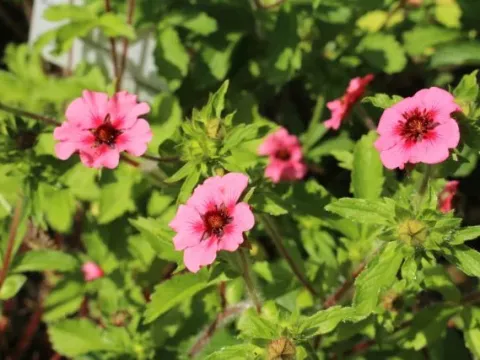
Hybrid cinquefoil
Potentilla hybrids
Hybrid cinquefoil (Potentilla hybrids) belongs to the Rosaceae family and is a popular choice for perennial garden borders. This hybrid group combines the hardiness of wild species with the aesthetic appeal of larger, more vibrant blooms.
What the section contains
Hybrid cinquefoil
These plants thrive in full sun conditions, which are essential for producing a high quantity of flowers throughout the growing season. While they can tolerate partial shade, their flowering performance may significantly diminish in darker environments.
The ideal soil for this crop is well-draining and moderately fertile, with a neutral to slightly acidic pH level. Heavy clay soils should be amended with organic matter or gravel to improve aeration and prevent root rot.
The plant is known for its high level of hardiness and adaptability to various climates. It can survive harsh winters without special protection, though a layer of organic mulch is beneficial in colder regions to preserve moisture.
Regular maintenance involves deadheading spent flowers to encourage further blooming cycles. This process keeps the plant looking tidy and prevents unnecessary seed production, allowing the plant to redirect energy to root development.
Powdery mildew is the most common threat to Potentilla hybrids, especially in humid conditions with poor air circulation. Providing sufficient spacing between plants is the best cultural control method.
Fungal leaf spots can occur during rainy periods, causing premature leaf drop. Removing fallen leaves from the garden bed reduces the inoculum pressure for the next season and helps maintain plant health.
Insects like aphids and mites may occasionally infest the plants, particularly during dry spells. Using insecticidal soaps or horticultural oils is usually effective in managing these pest populations without harming the environment.
Root rot is often a result of overwatering or poor soil drainage, which inhibits the respiration of the root system. Always ensure the ground is dry enough before providing additional hydration to the plant.
Monitoring the plant throughout the growing season allows for early intervention against diseases. Using balanced fertilizers in spring provides sufficient strength to the plants to resist biological attacks effectively.