
Hoppe's Lady's Mantle
Alchemilla hoppeana
Description
Growing requirements
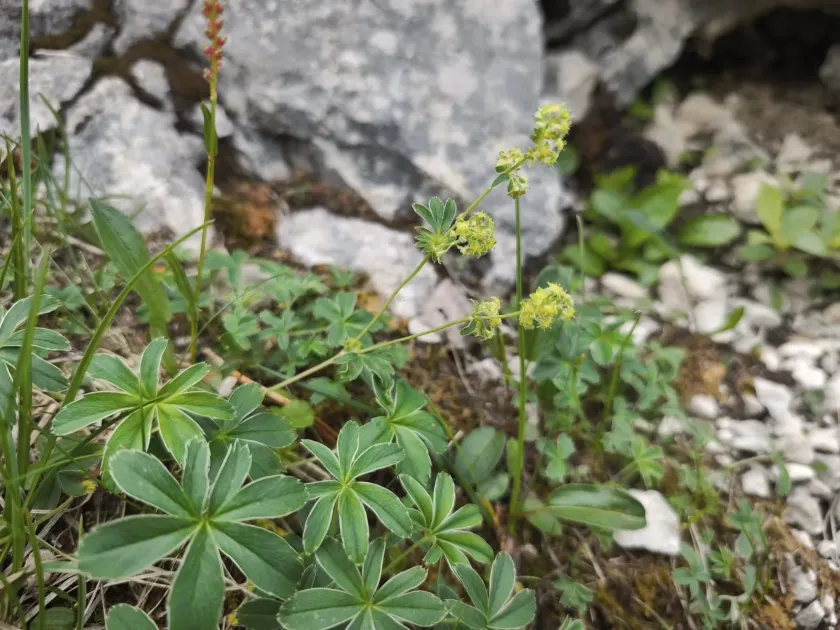
Hoppe's Lady's Mantle (Alchemilla hoppeana) is a low-growing perennial species belonging to the Rosaceae family. It is a highly specialized plant originating from the alpine regions of Europe.
The plant thrives in rocky substrates and mountainous meadows, demonstrating significant adaptation to cold climates and rocky soil structures.
For successful cultivation, it requires a well-draining soil composition, typically a mix of loam, sand, and gravel, to prevent moisture retention around the root crown.
Optimal growth is achieved in sunny or partially shaded locations where temperatures remain cool, mirroring its natural high-altitude environment.
In landscape agronomy, it is valued as an excellent ground cover, effectively preventing soil erosion on slopes and offering a uniform, decorative appearance throughout the season.
Main diseases and pests
The primary health issues for Alchemilla hoppeana are linked to environmental stress, particularly excessive soil or atmospheric moisture.
Powdery mildew represents a common fungal threat that appears as a white dust-like covering on foliage, especially during humid summer months.
Root rot is a significant danger in compacted or poorly drained soils, often leading to rapid plant decline if not caught early.
Insects like aphids can occasionally settle on tender shoots, though they rarely cause fatal damage to well-established, healthy specimens.
Integrated pest management, including precise watering techniques and ensuring proper spacing between plants, is the most effective approach for maintaining healthy crops.