
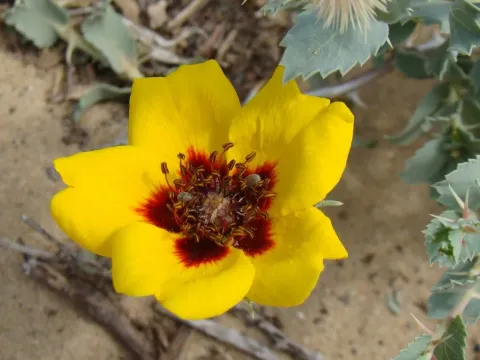
Hulthemia
Hulthemia
Hulthemia is a unique genus of plants from the Rosaceae family, which is often classified in modern taxonomy as a section of the genus Rosa. The primary species, Hulthemia persica, is notable for its exceptional resilience in hot and arid desert environments.
What the section contains

Hulthemia
The native habitat of this plant encompasses the desert and semi-desert regions of Central Asia, Iran, and Afghanistan. In its natural environment, the culture thrives on rocky slopes, preferring sunny locations with well-drained substrate, which contributes to its high drought tolerance.
Botanically, the plant is distinguished from its relatives by having simple, entire leaves, whereas most members of the Rosaceae family possess compound leaves. The shrub exhibits a characteristic xerophytic structure, allowing it to conserve moisture efficiently even during prolonged periods of drought.
Successful cultivation requires sites with maximum exposure to sunlight and poor, but well-structured soils. The plant does not tolerate waterlogging in the root zone, making the establishment of a high-quality drainage layer essential when planting in gardens or containers.
The agrotechnics of Hulthemia involve minimal intervention; it requires almost no regular irrigation once established. The plant demonstrates high resistance to sharp temperature fluctuations and can overwinter in temperate regions, provided that dry conditions are maintained during the cold season.
Common issues for Hulthemia under conditions of high humidity include fungal diseases, such as powdery mildew and black spot. These pathogens thrive in stagnant air and moist environments, which are extremely uncharacteristic of its natural arid habitat.
Pests that affect the culture include aphids and spider mites. The latter is particularly dangerous during periods of extreme heat when growing the plant in greenhouses or densely planted areas where natural air circulation is restricted.