
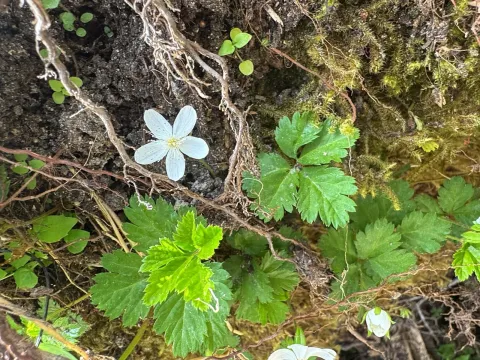
Rubus pedatus
Rubus pedatus
Rubus pedatus, commonly known as the five-leaved bramble, is a unique perennial species belonging to the Rosaceae family. It is native to the cool, moist coniferous forests of western North America and parts of eastern Asia, where it thrives in the understory of shaded, temperate environments.
What the section contains
Rubus pedatus
Botanically, it is characterized by creeping stems that root at the nodes, allowing it to spread efficiently along the forest floor. Its foliage consists of palmately lobed leaves, which provide a lush, carpet-like appearance. The plant produces delicate white flowers followed by small, palatable red berries that reflect its classification within the genus Rubus.
Cultural requirements for Rubus pedatus center on maintaining a cool, moist microclimate. It demands soil that is rich in organic matter, acidic in pH, and consistently damp. In garden settings, it is best placed in partial to deep shade to mimic the forest environment and prevent heat stress.
This species is exceptionally cold-hardy, well-adapted to regions with long, snowy winters. It does not perform well in arid or high-temperature conditions, requiring consistent moisture and protection from intense mid-day sun, which can dehydrate the plant rapidly.
Regarding its utility, Rubus pedatus is primarily valued as an ornamental groundcover for woodland gardens or shaded rockeries. While the berries are edible, their low volume and small size make them of limited agricultural value, serving more as a wildlife attractant than a commercial berry crop.
The primary threats to the health of Rubus pedatus are related to improper environmental conditions. Poor drainage often leads to root rot pathogens, which can decimate patches of the plant if not addressed by improving soil structure or adjusting irrigation practices.
Pest pressure is generally minimal, though slugs and snails are the most common problematic visitors, particularly in damp, shaded settings. Keeping the area free of heavy leaf litter and utilizing organic molluscicides can effectively manage these populations without harming the plant's delicate growth.