
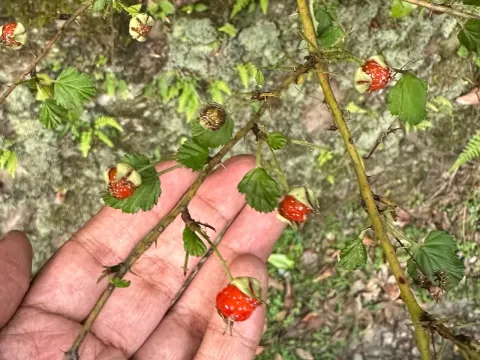
Rubus microphyllus
Rubus microphyllus
Rubus microphyllus is a perennial shrub belonging to the Rosaceae family. Native to East Asia, including parts of Japan and China, this species is known for its compact foliage and specific growth habits in temperate regions.
What the section contains
Rubus microphyllus
The plant requires full sun to partial shade for optimal growth and fruit production. It thrives in well-draining, nutrient-rich soils with a slightly acidic to neutral pH level, avoiding areas prone to waterlogging.
Botanically, it is characterized by slender stems and characteristically small leaves. It functions as a scrambling shrub, often requiring support systems such as trellises in agricultural settings to maximize sunlight exposure and airflow.
Climatic requirements involve moderate seasonal temperatures. While somewhat resilient, it benefits from protection against harsh winter winds and heavy frost to ensure the survival of productive canes.
Agronomic practices include consistent irrigation during the growing season, especially during fruit set, and the application of balanced organic fertilizers to maintain high yield potential.
The economic value of this crop is tied to its fruit production, which is utilized for both fresh market sales and culinary processing. It is appreciated for its distinct aroma and versatility.
Yield stability depends on annual pruning, where old and weak canes are removed to allow for the growth of vigorous new shoots. This process significantly improves harvest quality.
Common diseases include fungal pathogens such as rust and leaf spot, which are often exacerbated by poor air circulation. Implementing proper spacing is key to disease prevention.
Pests such as mites and aphids can affect plant vigor. Integrated pest management strategies, including monitoring and biological control, are recommended for maintaining a healthy plantation.
Harvesting is typically done manually due to the delicate nature of the berries. Frequent harvesting during peak season ensures the best taste and shelf life for the produce.