
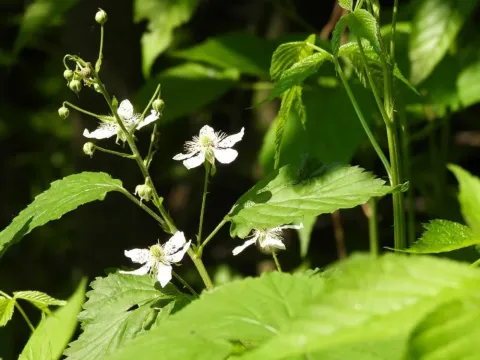
Smooth blackberry
Rubus canadensis
The smooth blackberry (Rubus canadensis) is a perennial shrub species belonging to the Rosaceae family. Native to eastern North America, it is particularly recognized for its thornless stems and robust cold hardiness, distinguishing it from many other wild blackberry varieties.
What the section contains
Smooth blackberry
Botanically, this species features erect or arching canes that grow up to two meters in length. It naturally thrives in moist, fertile, and slightly acidic soils, often colonizing woodland edges and clearings where the soil remains consistently damp during the growing season.
For commercial and garden production, it is essential to provide well-drained soils rich in organic matter. Mulching around the base of the plants is highly recommended to retain soil moisture and suppress weed growth, which competing species can negatively impact.
Cultivation requires careful pruning of old canes to promote vigor in new vegetative growth. Because the species is native to cooler temperate climates, it does not require significant protection from frost, making it a reliable crop in regions with shorter growing seasons.
The fruit is widely appreciated for its flavor and culinary versatility, suitable for both fresh markets and various food processing applications. Its economic value lies in its high yields and ease of harvest due to the lack of thorns, which saves labor costs.
The most common disease challenges for Rubus canadensis include anthracnose and botrytis blight, particularly in high-humidity environments. Maintaining proper plant spacing is vital to ensure adequate air circulation and reduce disease pressure.
Pest management should focus on common blackberry pests such as the raspberry crown borer and various aphid species. Integrated pest management strategies, including the use of beneficial insects and regular canopy monitoring, are highly effective for maintaining crop health.