
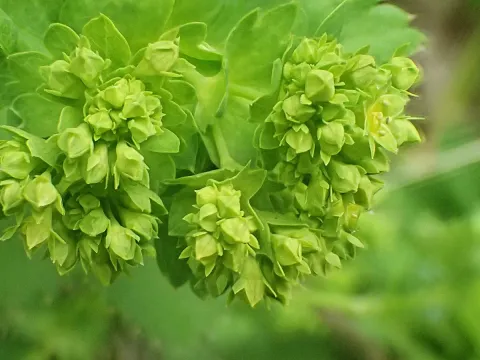
Smooth lady's-mantle
Alchemilla glabra
Smooth lady's-mantle (Alchemilla glabra) is a perennial herbaceous plant belonging to the Rosaceae family. It is typically propagated by seeds or by dividing established clumps in early spring or late autumn.
What the section contains
Smooth lady's-mantle
Seeds require a period of stratification in cold conditions to break dormancy and ensure high germination rates. Sowing directly into the soil during autumn allows for natural temperature cycles to facilitate sprouting.
For container-based propagation, seeds should be sown in early spring in well-draining soil mixtures. Young plants require consistent moisture and moderate light levels to establish a healthy root system before being hardened off.
When transplanting, spacing the plants 30–40 centimeters apart is recommended to allow for full development. Once established, the plants form a dense, uniform carpet that effectively suppresses competing weed growth.
The plant is known for its longevity, capable of growing in the same location for over a decade. Minimal disturbance is preferred once the root system has fully established itself in the site.
Alchemilla glabra thrives in moist, well-draining soils with a neutral or slightly acidic pH. It performs exceptionally well in temperate regions, reflecting its natural habitat in meadows and alpine pastures.
While the plant prefers sunny spots, it is highly tolerant of partial shade. This adaptability makes it suitable for various landscapes, although full sun usually promotes more vigorous vegetative growth and flowering.
The species is exceptionally hardy and can withstand freezing winter temperatures without any protective coverage. It is a reliable choice for cold climates where other delicate species might suffer from frost damage.
Adequate water supply is crucial during periods of peak summer heat. Consistent irrigation helps maintain the plant's health and ensures the foliage remains vibrant, preventing premature browning of the leaves.
Although it does not require heavy fertilization, an annual application of compost or a balanced mineral fertilizer in spring can enhance vigor and foliage density, especially when grown for commercial harvest.
The economic yield of Smooth lady's-mantle is measured by the production of dried aerial biomass. Commercial harvests are typically at their peak starting from the third year of cultivation.
Optimal timing for harvest is during the peak of the flowering season, which ensures the highest concentration of active compounds, including tannins and flavonoids, valued by the pharmaceutical industry.
Proper soil management and weed control during the establishment phase directly correlate with higher biomass output. Regular moisture levels during the growing season significantly influence final yield weight.
Harvesting efficiency is improved by using specialized equipment that leaves the root crown intact. This practice ensures the plant can regenerate for multiple harvests within its lifespan, enhancing long-term profitability.
Post-harvest processing, including immediate cleaning and controlled drying, is essential to maintain the quality of the raw material and ensure it meets market standards for herbal products.
Smooth lady's-mantle is generally resistant to most pests and diseases. However, high humidity and poor ventilation can occasionally lead to outbreaks of powdery mildew, which can be managed with organic fungicides.
Aphids can sometimes infest the plant during warm springs, though they rarely cause fatal damage. Integrated pest management, including natural predators, is usually sufficient to keep populations in check.
Root rot caused by stagnant water is the primary concern for this crop. Ensuring proper site selection with adequate drainage is the most effective way to prevent this physiological disorder.
Weeds can be a significant threat only during the initial establishment period. Mulching or manual weeding in the first year is vital to give the Alchemilla sufficient space and resources to develop.
Monitoring for any signs of leaf spotting or wilting is recommended during periods of extreme humidity. Early detection and removal of affected foliage can prevent the spread of localized infections.
Harvesting is performed by cutting the upper green parts of the plant, leaving approximately 5–10 centimeters above the ground. This method allows the root system to support rapid regrowth of new shoots.
The raw material should be handled with care to avoid crushing or soil contamination. Immediate transportation to the processing facility is necessary to prevent fermentation or moisture-related degradation.
Drying must occur in a well-ventilated, shaded environment or controlled-temperature drying chambers. Avoiding direct sunlight is critical to preserving the herb's color and chemical integrity.
Once dried to the correct moisture content, the product is sorted to remove any foreign debris. Quality control at this stage determines the final grade and market value of the harvested material.
Finally, the product is stored in airtight, moisture-proof containers until shipping. This ensures that the medicinal and aromatic properties are protected from environmental factors during storage and transport.