
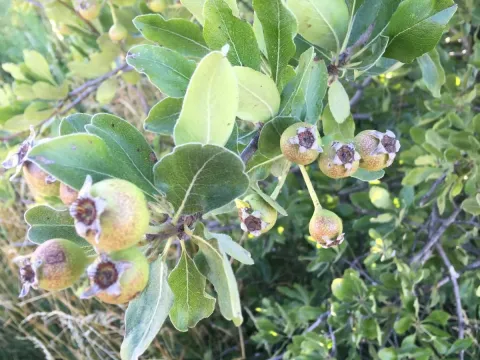
Snow pear
Pyrus nivalis
The Snow pear (Pyrus nivalis) belongs to the Rosaceae family. This deciduous tree can reach heights of up to 10 meters in its natural habitat. It is highly valued for its aesthetic appeal, particularly in spring when the crown is covered with a mass of white blossoms.
What the section contains
Snow pear
The species is native to Central and Southern Europe as well as parts of Asia Minor. It thrives in well-lit locations protected from strong winds. In the wild, these trees are typically found on dry, rocky slopes, which highlights their natural resilience to drought and harsh environmental conditions.
The plant has moderate requirements regarding soil composition. It grows well in loamy and sandy soils that offer good drainage. A critical requirement for healthy development is the absence of stagnant groundwater, as the root system is sensitive to waterlogging.
The Snow pear is noted for its high frost resistance and its ability to withstand significant temperature fluctuations. This makes it a viable candidate for landscaping and limited agricultural use in regions characterized by moderately severe winters.
Regular pruning is essential to maintain the tree's health and productivity. Proper trimming not only enhances the tree's ornamental structure but also improves air circulation, which significantly reduces the incidence of fungal infections within the canopy.
The fruits of the Snow pear are small, rounded or pear-shaped, and covered with a distinctive grayish fuzz, which is the origin of its common name. When fresh, they are generally inedible due to high tannin content and firm, astringent flesh.
Agricultural use of this crop is traditionally focused on processing. The fruits require an extended period of maturation or bletting, after which they develop a more palatable flavor suitable for the production of cider or specialized fermented beverages.
Yield capacity depends heavily on pollination conditions and the age of the tree. In favorable years, the tree produces a consistent harvest, though it is rarely treated as a primary commodity in modern commercial fruit orchards.
Historically, the fruit was used in folk medicine and regional cuisine. Today, the primary interest in the Snow pear lies in its utility as a hardy rootstock for other pear varieties, due to its adaptability and compatibility with various scions.
In breeding programs, the Snow pear serves as a valuable genetic resource for enhancing the resistance of new varieties to abiotic stress. Its capacity to adapt to poor soil conditions remains a distinct advantage for sustainable farming practices.
The primary threats to this crop include common diseases affecting fruit trees of the Rosaceae family. Scab is frequently observed, which tends to affect foliage and fruits during periods of high humidity and rainfall.
Fire blight is another significant danger, capable of spreading rapidly and causing severe damage to young shoots and branches. Continuous monitoring of the bark and leaves is necessary to detect outbreaks early and apply corrective measures.
Common pests include the pear psyllid and the codling moth. These can cause substantial losses in fruit quality, making preventative treatments with insecticides during early developmental stages an essential part of orchard maintenance.
Insufficient soil aeration often leads to the development of root rots. To mitigate this risk, it is recommended to monitor the condition of the root zone and prevent soil compaction around the base of the tree.
Utilizing an integrated pest management strategy that combines biological and chemical controls allows for the minimization of risks, ensuring the long-term health and vitality of the tree over many decades.