
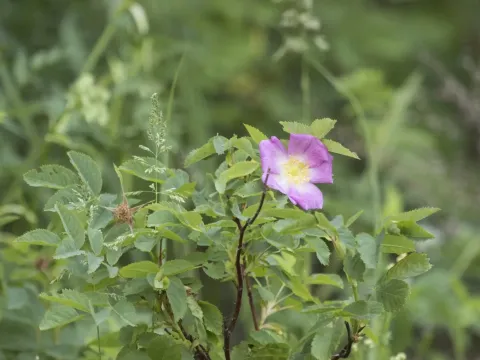
Smooth-leaved rose
Rosa glabrifolia
Seeds of Rosa glabrifolia are usually sown in autumn, in October, to provide natural stratification in the soil throughout the winter period. Spring sowing is also possible, but it requires mandatory artificial stratification of the seeds at low temperatures for 3 to 4 months.
What the section contains
Smooth-leaved rose
For plantation establishment, both the seed method and vegetative propagation using layering or cuttings are utilized. It is best to plant seedlings in their permanent location early in spring before active sap flow begins or in the autumn period when the plant is in its dormant phase.
The spacing between rows in commercial cultivation should be at least 3 meters, ensuring easy mechanical processing and sufficient light exposure for the bushes. In the row, an interval of 1 to 1.5 meters between individual plants is recommended.
The sowing depth for seeds is 2–3 cm, depending on the soil type. It is crucial to monitor the moisture levels of the topsoil, as drying out during the first weeks after germination can be fatal for young seedlings.
When using the transplant method, seedlings are planted in pre-prepared pits measuring 50x50 cm, enriched with organic fertilizers and superphosphate to ensure rapid root establishment in the new environment.
Rosa glabrifolia is a perennial shrub of the Rosaceae family, known for its high frost resistance and ability to adapt to various growing conditions. Its natural range covers regions with a temperate climate, where the plant demonstrates excellent survival rates.
The crop prefers sunny, well-lit areas with light, fertile loamy or sandy loam soils. A critical requirement is the absence of stagnant groundwater, as excessive moisture often leads to root rot.
The optimal soil pH level for the successful development of Rosa glabrifolia is within the 6.0–7.0 range. The plant responds well to the application of potassium-phosphorus fertilizers, which strengthen the bush's immune system and promote better shoot hardening before winter.
During the growing season, the rosehip requires moderate watering, especially during the active flowering and fruit development phases. Mature plants are highly drought-tolerant due to their deep-reaching root systems.
Regular sanitary and rejuvenating pruning should be performed to form a proper crown and stimulate fruit production. Removing old, unproductive branches older than 5 years significantly increases the overall productivity of the plantation.
The yield of Rosa glabrifolia depends directly on proper agricultural care, the age of the bushes, and the region's climatic conditions. On average, full fruiting begins 3–4 years after planting, reaching its maximum potential by the 7th or 8th year.
The fruits of this species are rich in vitamin C, organic acids, and sugars, making them a valuable raw material for the pharmaceutical and food industries. With proper technology, yields can reach 3 to 6 tons of fruit per hectare.
Yield stability is ensured by selecting the right varieties or forms and maintaining optimal planting density. Insufficient moisture in June or July can lead to fruit drop, which is why drip irrigation is frequently used on commercial plots.
The productive life of a single bush under proper care is 15–20 years. Annual application of humus or compost to the root zone in early spring is recommended to maintain high productivity levels.
- Timely pruning to rejuvenate the bush.
- Protecting soil moisture with mulching.
- Regular fertilization with essential micronutrients.
Among the most dangerous diseases for Rosa glabrifolia is powdery mildew, which manifests as a white coating on leaves and young shoots under high humidity conditions. Systemic fungicides are used for control.
Rust is also a serious threat, causing premature yellowing and leaf drop. Prevention includes removing infected branches and cleaning the area of plant debris in autumn where fungal spores typically hibernate.
Regarding pests, aphids and leaf rollers cause the most damage by feeding on young leaves and buds. Their mass infestation can significantly reduce the assimilation surface area of the plant.
The rose sawfly damages shoots by laying eggs in plant tissues, leading to branch deformation and stunted growth. Biological control methods, including attracting beneficial predatory insects, show high effectiveness.
To prevent the spread of infections and pests, it is crucial to maintain spatial isolation between rosehip plantations and other Rosaceae crops. Preventive insecticide spraying is recommended before mass flowering begins.
Harvesting Rosa glabrifolia fruits begins when they are fully ripe, taking on a characteristic bright red or orange color and becoming firm to the touch. It is important not to allow over-ripening, as this reduces the concentration of biologically active substances.
Manual harvesting is the most labor-intensive process, which is why specialized harvesters are being increasingly adopted on large industrial plantations. Careful mechanization helps reduce production costs while maintaining high product quality.
The harvested produce should be sent for processing or drying as quickly as possible. At room temperature, fresh fruits spoil rapidly, so cold storage is only permissible for a very short duration.
Drying is performed in specialized dryers at temperatures not exceeding 60–70 degrees Celsius, which allows for the maximum retention of vitamins. High-quality dried raw materials should have a moisture content of no more than 10–12%.
After the harvest, preventive treatment against pests is recommended to prepare the bushes for the winter period. The final step of the season includes weeding the rows and applying autumn fertilizers.