
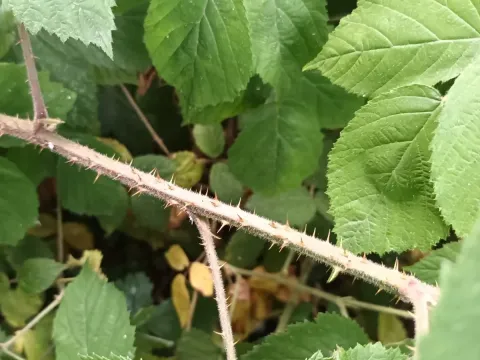
Rubus adscitus
Rubus adscitus
Rubus adscitus is a member of the Rosaceae family. It is a perennial shrub belonging to a complex group of blackberry species commonly found in the wild across various European landscapes, including parts of the United Kingdom.
What the section contains
Rubus adscitus
The plant thrives in open, sunny locations where it can receive ample light for photosynthesis. Protection from harsh, prevailing winds is essential to prevent physical damage to the canes and excessive transpiration during the growing season.
This species requires well-drained, fertile soil, ideally with a neutral to slightly acidic pH. Rich loam soils that retain moisture without becoming waterlogged are perfect for sustaining vigorous growth.
Root health is paramount; therefore, the planting site must have excellent drainage. Accumulation of water in the root zone can cause root rot, especially during the dormant winter months when the plant is less active.
In colder regions, agricultural management involves winter protection. Canes are typically removed from their support structures, gently bent towards the ground, and covered with mulch or protective fabric to prevent winter frost damage.
Yield efficiency for Rubus adscitus is highly dependent on proper pruning techniques. Because fruits develop on second-year canes, the removal of spent wood after harvest is necessary to encourage the development of new, productive growth.
Regular irrigation during the flowering and fruit-swelling stages is crucial for optimal production. Maintaining soil moisture during these critical phases ensures large, juicy berries and higher overall yield per square meter.
The berries possess a complex flavor profile typical of wild blackberries, balancing acidity with sweetness. They are highly sought after for both fresh consumption and culinary processing into jams, jellies, and desserts.
Implementing a trellising system improves plant management significantly. By training canes along wires, air circulation is improved, sunlight exposure is maximized, and the harvesting process becomes much more efficient.
Production periods can extend over several weeks depending on the local climate. Proper site selection and consistent maintenance allow farmers to secure a reliable supply of fresh berries throughout the season.
Common health issues for this blackberry species include fungal infections such as anthracnose and grey mould. These pathogens thrive in high-humidity environments and dense plantings where airflow is restricted.
Key pests include the blackberry mite and various beetles. Infestations can result in malformed or hardened berries, which significantly diminish the market value and quality of the harvest.
Preventative care is the first line of defense. This includes regular sanitization of tools, prompt removal of diseased plant parts, and ensuring adequate spacing between rows to facilitate natural drying of the foliage.
When necessary, integrated pest management (IPM) strategies should be employed, prioritizing biological controls and environmental modifications over chemical interventions whenever possible.
Monitoring the plantation regularly for early signs of disease or pest activity allows for localized management, preventing widespread damage and maintaining the overall vitality of the crop.
Harvesting Rubus adscitus is a delicate operation due to the fragile nature of the fruit. Since berries do not ripen simultaneously, multiple pickings are required over several weeks to capture all fruit at its peak quality.
Picking should ideally occur in the early morning while the fruits are cool and firm. This minimizes the risk of crushing the berries and helps maintain their integrity throughout the storage and distribution process.
Harvested berries should be placed immediately into ventilated punnets. Stacking large quantities in deep containers can lead to bruising and excessive juice leakage at the bottom of the pile.
For fresh market sales, berries must be stored in cool conditions between 0 and +2 degrees Celsius. This temperature range significantly extends the shelf life and prevents the onset of fungal decay.
For long-term usage, flash freezing is the preferred method. This technique preserves the nutritional profile and flavor of the fruit, allowing it to be used in various culinary applications well beyond the harvest window.