
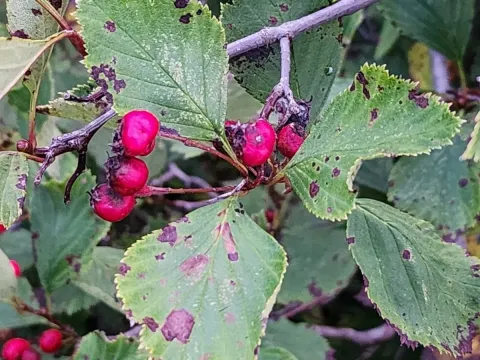
Rough-leaved hawthorn
Crataegus scabrida
The rough-leaved hawthorn (Crataegus scabrida) belongs to the Rosaceae family. This species is native to North America and is recognized for the distinct rough, scabrous texture of its foliage and young twigs, from which it derives its Latin name.
What the section contains
Rough-leaved hawthorn
It typically inhabits forest margins, open woodlands, and rocky areas. In an agricultural context, it is valued for its hardiness and ability to thrive in various soil types, ranging from sandy loams to heavier clay-based soils, provided they are well-drained.
The climate requirements for this species are moderate. It is highly winter-hardy and adapts well to temperate zones. It requires significant sunlight to achieve optimal photosynthesis and fruit production, making open locations ideal for cultivation.
Botanically, it forms a dense shrub or small tree. Its root system is robust, allowing it to withstand periods of mild drought once the plant is established. Proper spacing is essential to allow for airflow and light penetration into the interior of the crown.
Cultivation practices involve regular pruning to maintain an open canopy. This not only encourages fruit production but also improves accessibility for harvesting and management of the plant's health throughout the growing season.
The fruits of Crataegus scabrida are small pomes that turn a deep color upon maturity. They are highly versatile in culinary applications, being commonly used in jams, jellies, preserves, and traditional medicinal decoctions.
The yield potential is consistent when the plant is grown in suitable conditions. Harvesting typically occurs in late summer or early autumn. Hand-picking is the most efficient method to ensure the quality of the fruits for processing or fresh use.
Beyond culinary use, the hawthorn is prized for its pharmacological properties. The flowers and berries contain flavonoids and organic compounds known to support cardiovascular health and serve as a base for various natural health supplements.
In addition to its fruit, the plant serves as a valuable hedge. Its dense growth habit provides a natural barrier, while its attractive blossoms in the spring and bright berries in the autumn make it a popular choice for ornamental use.
Productivity can be enhanced through balanced fertilization and moisture management. As a low-maintenance crop, it offers excellent returns for gardeners and small-scale farmers looking for resilient fruit-bearing species.
Like many members of the Rosaceae family, the rough-leaved hawthorn is susceptible to fungal diseases such as powdery mildew and rust. Good air circulation and keeping the base of the plant free of debris are critical preventive measures.
Pests including aphids and mites can affect the leaves during the early spring. Monitoring for early signs of infestation allows for timely intervention using organic or chemical controls, preserving the tree's vigor and yield capacity.
To reduce disease pressure, avoid planting near species that might host similar pathogens. Regular sanitation, which includes removing dead or diseased wood during the winter dormant period, is essential for maintaining plant health.
Consistent soil moisture management prevents stress, which is a primary trigger for pest attraction. Plants that are hydrated correctly exhibit stronger natural defenses against opportunistic insects and fungi.
A proactive approach involving yearly monitoring and scheduled pruning will protect the health of your hawthorn crop, ensuring that it remains productive and visually appealing for many years to come.